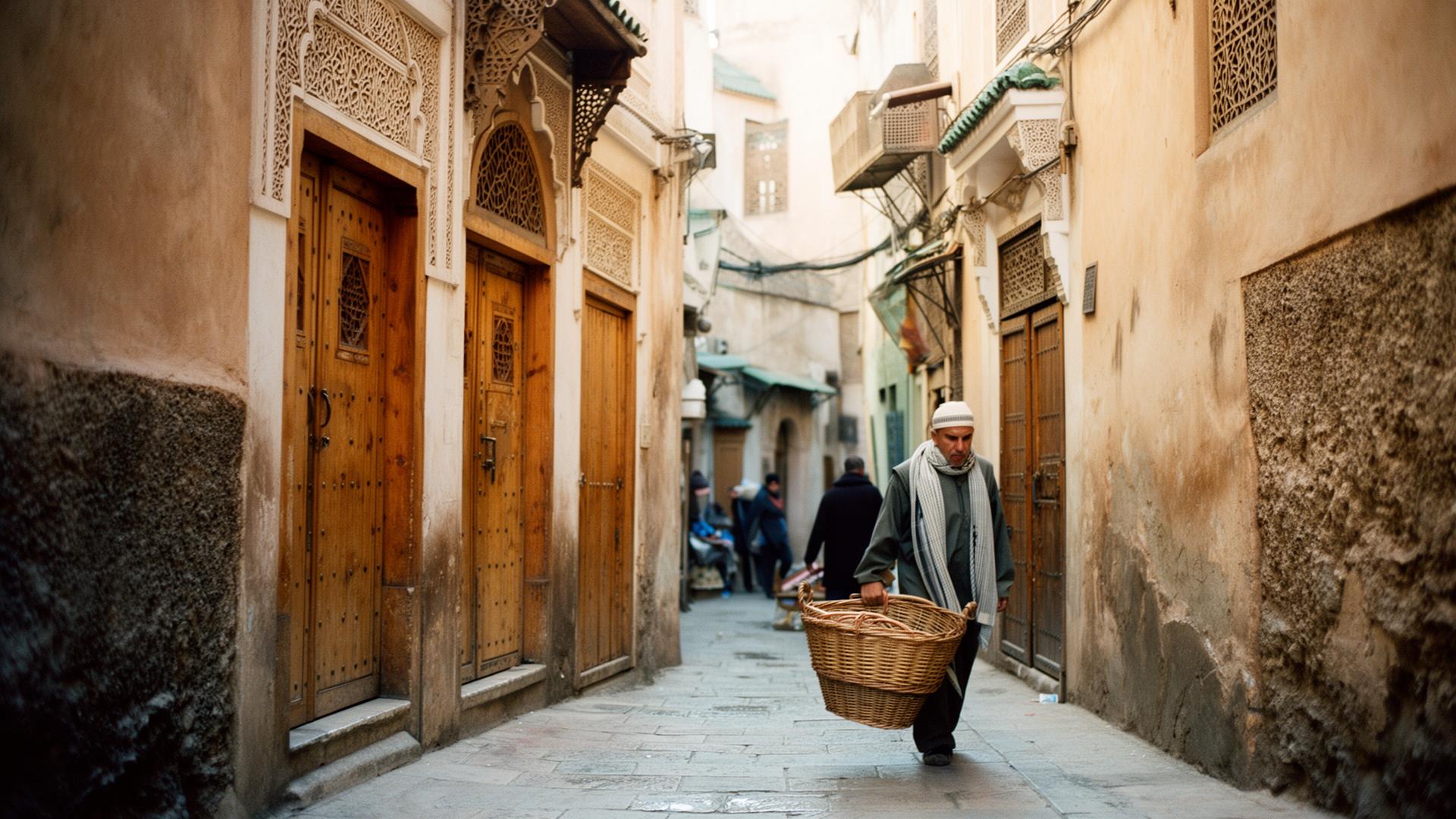
Fes, Marrakech, Meknes and Rabat are Morocco's four imperial cities — each a former capital of a ruling dynasty. Together they trace a thousand years of Moroccan power, architecture and craft, and they form the country's classic 'imperial cities' touring circuit.
In this guide
What 'imperial city' means
An imperial city is one that has served, at some point in history, as the capital of Morocco under a ruling dynasty. Four cities hold this title — Fes, Marrakech, Meknes and Rabat — and over the centuries the capital moved between them as power shifted from one dynasty to the next. Each left behind palaces, mosques, ramparts and medinas that still define the city today.
Fes — the spiritual and scholarly capital
Founded in the late 8th and early 9th centuries and developed under the Idrisid dynasty, Fes became Morocco's intellectual and spiritual heart. It served as capital under the Idrisids and later the Marinids, who endowed it with magnificent madrasas. Its walled medina, Fes el-Bali, is a UNESCO World Heritage Site and home to the al-Qarawiyyin mosque and university. Highlights include the tanneries, the Bou Inania and Al-Attarine madrasas, and the labyrinth of artisan souks.
Marrakech — the southern imperial hub
Founded by the Almoravids in the 11th century, Marrakech served as capital under the Almoravids and the Almohads, and again under the Saadians, who built the Saadian Tombs and El Badi Palace. Its landmarks include the Koutoubia minaret, the ramparts and gardens, the Bahia Palace and the great square of Jemaa el-Fna. Marrakech is the most visited of the four and the usual gateway to the south and the Sahara.
Meknes — Moulay Ismail's monumental capital
Meknes rose to prominence in the 17th century under the Alaouite sultan Moulay Ismail, who made it his capital and built it on a grand scale — vast walls, monumental gates such as Bab Mansour, royal granaries and stables, and extensive water works. Quieter and less visited than Fes or Marrakech, it pairs naturally with the nearby Roman ruins of Volubilis and the holy town of Moulay Idriss.
Rabat — the modern capital
Rabat has roots in the Almohad era — the unfinished Hassan Tower and the Kasbah of the Udayas date from the 12th century — and it became the country's capital in the modern period; it remains the seat of government today. Calm, green and coastal, it offers the Hassan Tower and Mausoleum of Mohammed V, the Udayas, the Chellah necropolis and a UNESCO-listed historic core.
Touring the imperial cities together
The classic imperial-cities circuit links all four, usually as a loop that also takes in Casablanca for its airport and the Hassan II Mosque. A common routing runs Casablanca – Rabat – Meknes (with Volubilis) – Fes – then south over the Middle Atlas to Marrakech, or the reverse. Allow at least a week to do them justice, longer if you add the desert or the coast.
Fes and Marrakech each deserve a full day or two with a licensed guide; Meknes and Rabat can be seen more quickly. Trains link Rabat, Casablanca, Meknes, Fes and Marrakech comfortably, while a private driver gives you the flexibility to stop at Volubilis and travel at your own pace.
Frequently asked
What are the four imperial cities of Morocco?
Fes, Marrakech, Meknes and Rabat. Each served as the capital of Morocco under a ruling dynasty at some point in history, which is what earns them the title of imperial city.
Which is the oldest imperial city in Morocco?
Fes is the oldest, founded in the late 8th and early 9th centuries and developed under the Idrisid dynasty. Marrakech followed in the 11th century under the Almoravids, Rabat's monumental phase came under the 12th-century Almohads, and Meknes rose in the 17th century under Moulay Ismail.
How long do you need to tour Morocco's imperial cities?
Allow at least a week for the classic circuit of all four, ideally with a day or two each in Fes and Marrakech. Adding the Sahara, the Atlas or the coast extends it to ten days or two weeks.
Planning a trip?
Let a Marrakech atelier handle the details.
Tell us your dates and style and we'll send a written itinerary and a transparent quote within 24 hours.
Request an itineraryKeep reading
Culture
Morocco's UNESCO World Heritage Sites
Morocco has nine UNESCO World Heritage Sites, all of them cultural — from the great imperial medinas of Fez and Marrakesh to the earthen ksar of Aït Ben Haddou, the Roman ruins of Volubilis and the Portuguese-built city of El Jadida. This guide describes each and shows how to weave them into a single trip.
Planning
Things to Do in Fes: The Essential Guide
Fes el-Bali is the world's largest inhabited medieval city — a UNESCO World Heritage medina of 9,400 lanes, 14th-century madrasas, the planet's oldest university and the Chouara tanneries. It demands a good guide, unhurried time and genuine curiosity.
Planning
Things to Do in Meknes: The Essential Guide
Meknes — the fourth of Morocco's imperial cities and the least visited — rewards the traveller who lingers: a UNESCO medina, the monumental gates and granaries of Sultan Moulay Ismail's 17th-century capital, and the Roman city of Volubilis 33 km to the north.