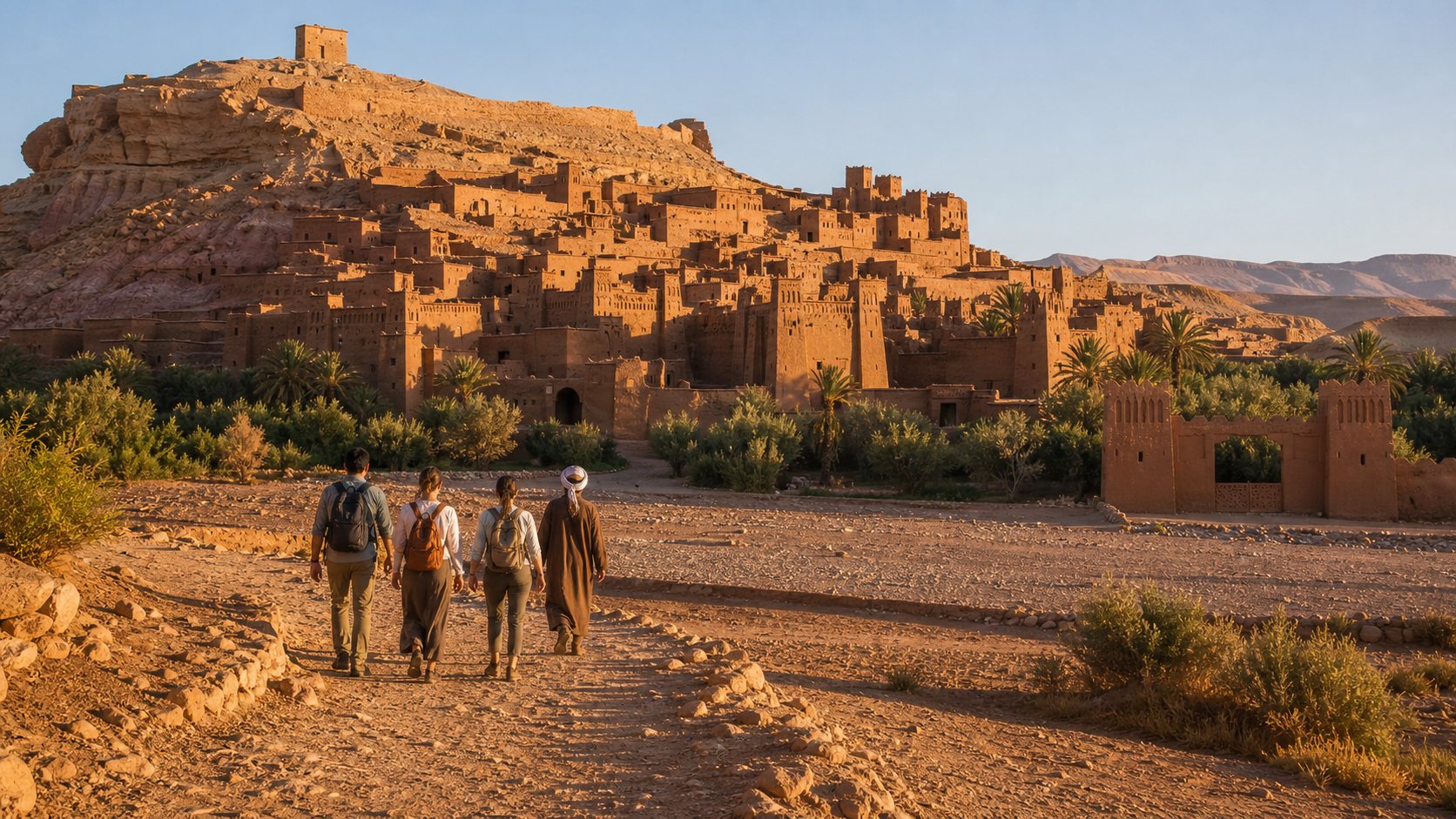
Morocco has nine UNESCO World Heritage Sites, all of them cultural — from the great imperial medinas of Fez and Marrakesh to the earthen ksar of Aït Ben Haddou, the Roman ruins of Volubilis and the Portuguese-built city of El Jadida. This guide describes each and shows how to weave them into a single trip.
In this guide
The nine sites at a glance
All of Morocco's World Heritage Sites are inscribed for their cultural value; the country currently has no natural World Heritage Site. Together they tell the story of Morocco's dynasties, its trans-Saharan trade, its Roman past and its centuries of contact with the wider Mediterranean and Atlantic worlds.
- Medina of Fez — inscribed 1981.
- Medina of Marrakesh — inscribed 1985.
- Ksar of Aït Ben Haddou — inscribed 1987.
- Historic City of Meknes — inscribed 1996.
- Archaeological Site of Volubilis — inscribed 1997.
- Medina of Tétouan (formerly Titawin) — inscribed 1997.
- Medina of Essaouira (formerly Mogador) — inscribed 2001.
- Portuguese City of Mazagan (El Jadida) — inscribed 2004.
- Rabat, Modern Capital and Historic City — inscribed 2012.
The imperial medinas: Fez, Marrakesh, Meknes, Rabat
The Medina of Fez (1981) is the spiritual and intellectual heart of historic Morocco — a vast, walled medieval city of mosques, madrasas and the tanneries of Fes el-Bali, home to one of the oldest continuously operating universities in the world. The Medina of Marrakesh (1985) gathers the Koutoubia minaret, the ramparts, the palaces and the great square of Jemaa el-Fna into a city founded by the Almoravids.
The Historic City of Meknes (1996) preserves the monumental vision of Sultan Moulay Ismail, with its colossal gates, granaries and stables. Rabat, Modern Capital and Historic City (2012) is recognised for the way an early-20th-century planned capital was laid over older layers — the Almohad Hassan Tower and the Kasbah of the Udayas among them — blending Arab-Muslim and European traditions.
Coastal cities: Essaouira, Tétouan, El Jadida
The Medina of Essaouira (2001), formerly Mogador, is a late-18th-century fortified port laid out by a European military architect, its grid and sea bastions distinct from the organic older medinas. The Medina of Tétouan (1997), formerly Titawin, in the north reflects a strong Andalusian heritage, rebuilt by refugees from Al-Andalus.
The Portuguese City of Mazagan, now part of El Jadida (2004), preserves an early-16th-century Portuguese fortified town on the Atlantic, including its star-shaped ramparts and the remarkable vaulted cistern. Together these sites mark Morocco's long Atlantic and Mediterranean exchange.
The south and the Roman past: Aït Ben Haddou and Volubilis
The Ksar of Aït Ben Haddou (1987), on the old caravan route between the Sahara and Marrakesh, is the most striking surviving example of southern Moroccan earthen (pisé) architecture — a cluster of kasbahs rising from a hillside above the river. The Archaeological Site of Volubilis (1997), near Meknes, is the best-preserved Roman town in Morocco, with mosaics, a basilica, a triumphal arch and capitol that mark the empire's south-western frontier.
How to combine them on one trip
Several sites cluster conveniently. Meknes and Volubilis sit close together and pair naturally in a day from Fez. Aït Ben Haddou lies on the classic route between Marrakesh and the Sahara, usually visited en route to or from Ouarzazate. Essaouira is an easy add-on from Marrakesh on the coast, while El Jadida pairs with Casablanca on the Atlantic.
A well-planned two-week trip can take in most of them: Fez and its medina, Meknes and Volubilis, Rabat on the way to or from Casablanca and El Jadida, Marrakesh, and Aït Ben Haddou on the desert circuit — with Essaouira and Tétouan as coastal or northern extensions. A licensed local guide brings the medinas and ruins to life far more than a self-guided wander.
Frequently asked
How many UNESCO World Heritage Sites does Morocco have?
Morocco has nine UNESCO World Heritage Sites, all of them cultural: the medinas of Fez, Marrakesh, Tétouan and Essaouira; the historic cities of Meknes and Rabat; the ksar of Aït Ben Haddou; the Roman site of Volubilis; and the Portuguese city of Mazagan (El Jadida). Morocco currently has no natural World Heritage Site.
Which is the oldest UNESCO site in Morocco?
The Medina of Fez was the first to be inscribed, in 1981, followed by the Medina of Marrakesh in 1985 and the Ksar of Aït Ben Haddou in 1987. Most recent was Rabat, added in 2012.
Can you visit several of Morocco's World Heritage Sites in one trip?
Yes. Meknes and Volubilis pair in a day from Fez; Aït Ben Haddou sits on the Marrakesh-to-Sahara route; Essaouira is a short hop from Marrakesh; and Rabat and El Jadida line up along the Atlantic near Casablanca. A two-week itinerary can comfortably include most of the nine.
Planning a trip?
Let a Marrakech atelier handle the details.
Tell us your dates and style and we'll send a written itinerary and a transparent quote within 24 hours.
Request an itineraryKeep reading
Culture
Morocco's Four Imperial Cities
Fes, Marrakech, Meknes and Rabat are Morocco's four imperial cities — each a former capital of a ruling dynasty. Together they trace a thousand years of Moroccan power, architecture and craft, and they form the country's classic 'imperial cities' touring circuit.
Planning
Things to Do in Fes: The Essential Guide
Fes el-Bali is the world's largest inhabited medieval city — a UNESCO World Heritage medina of 9,400 lanes, 14th-century madrasas, the planet's oldest university and the Chouara tanneries. It demands a good guide, unhurried time and genuine curiosity.
Planning
Things to Do in Essaouira: The Essential Guide
Essaouira is Morocco's Atlantic counterpoint to Marrakech — a fortified white-and-blue port city with ramparts, a working fishing harbour, outstanding grilled seafood, world-class windsurfing and a medina that is genuinely liveable and calm. Three hours from Marrakech and entirely different in character.