Morocco packs imperial cities, high mountains, the Sahara and two coastlines into one country. This region-by-region overview helps you decide where to focus, since no single trip can cover it all comfortably.
In this guide
The imperial cities
Marrakech, Fes, Meknes and Rabat are the historic heart of Morocco. Marrakech is the vibrant, accessible hub with Jemaa el-Fna and the souks; Fes has the largest, most atmospheric medina; Meknes and Rabat are quieter and pair with the Roman ruins of Volubilis and the capital's monuments.
The Sahara and the south
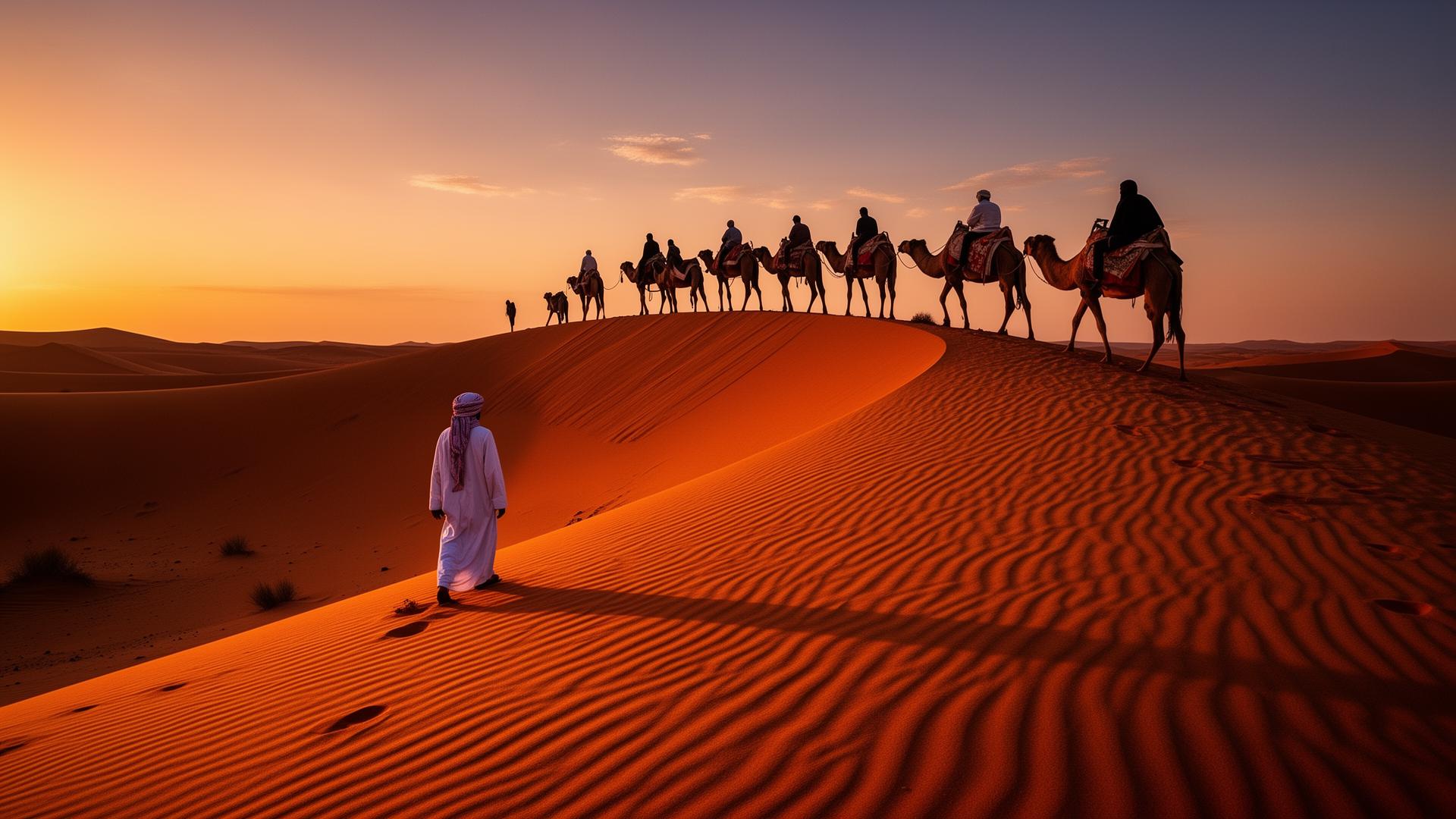
Beyond the High Atlas lie the kasbah valleys (Ouarzazate, Aït Ben Haddou, the Dadès and Todra gorges) and the great dune fields of Erg Chebbi near Merzouga and Erg Chigaga near M'hamid. This is a multi-day region reached on scenic mountain roads, not a day trip.
The High Atlas mountains
The Atlas rises just south of Marrakech: the Ourika and Imlil valleys for easy day trips and Berber villages, and Jbel Toubkal (4,167 m) for North Africa's premier trek. Cooler air and green valleys make it a refreshing contrast to the cities and desert.
The coasts: Atlantic and Mediterranean
The Atlantic coast runs from breezy, walled Essaouira through Oualidia and Agadir to the surf of Taghazout. In the north, the Mediterranean meets the Atlantic at Tangier, gateway to the blue city of Chefchaouen and the UNESCO medina of Tetouan.
Putting a route together
Choose by interest and time: cities and desert for a classic first trip; mountains and coast for a slower, cooler journey; the north for blue towns and Mediterranean light. Most routes start or end in Marrakech or Fes, linked by the south or the coast.
Frequently asked
What are the main regions of Morocco?
Broadly: the imperial cities (Marrakech, Fes, Meknes, Rabat), the Sahara and kasbah south, the High Atlas mountains, the Atlantic coast (Essaouira to Agadir) and the northern Mediterranean (Tangier and Chefchaouen).
Which part of Morocco should I visit?
It depends on your interests and time. Cities and desert make the classic first trip; the Atlas and coast suit a cooler, slower journey; the north is best for the blue city of Chefchaouen and Mediterranean towns. Few trips cover more than two or three regions well.
Can you see all of Morocco in one trip?
Not comfortably. The country is large and varied, and trying to see everything means long days in the car. It is better to choose a region or two and travel them well, saving the rest for a return visit.
Planning a trip?
Let a Marrakech atelier handle the details.
Tell us your dates and style and we'll send a written itinerary and a transparent quote within 24 hours.
Request an itineraryKeep reading
Planning
First Time in Morocco: Everything You Need to Know
A first trip to Morocco is easier than many expect: a stable, welcoming country set up for tourism. This guide covers where to go, how long to stay, what to expect and the handful of practical things that make a first visit go smoothly.
Itineraries
Morocco Itinerary: 7 Days
A week is enough to pair Marrakech with the Sahara, or to trace the imperial cities of the north. Here are two proven 7-day Morocco itineraries — and how to choose between them.
Planning
The Best Time to Visit Morocco
Spring (March–May) and autumn (September–November) are the best all-round times to visit Morocco — warm days, cool evenings and ideal conditions for the medinas, mountains, coast and desert alike.