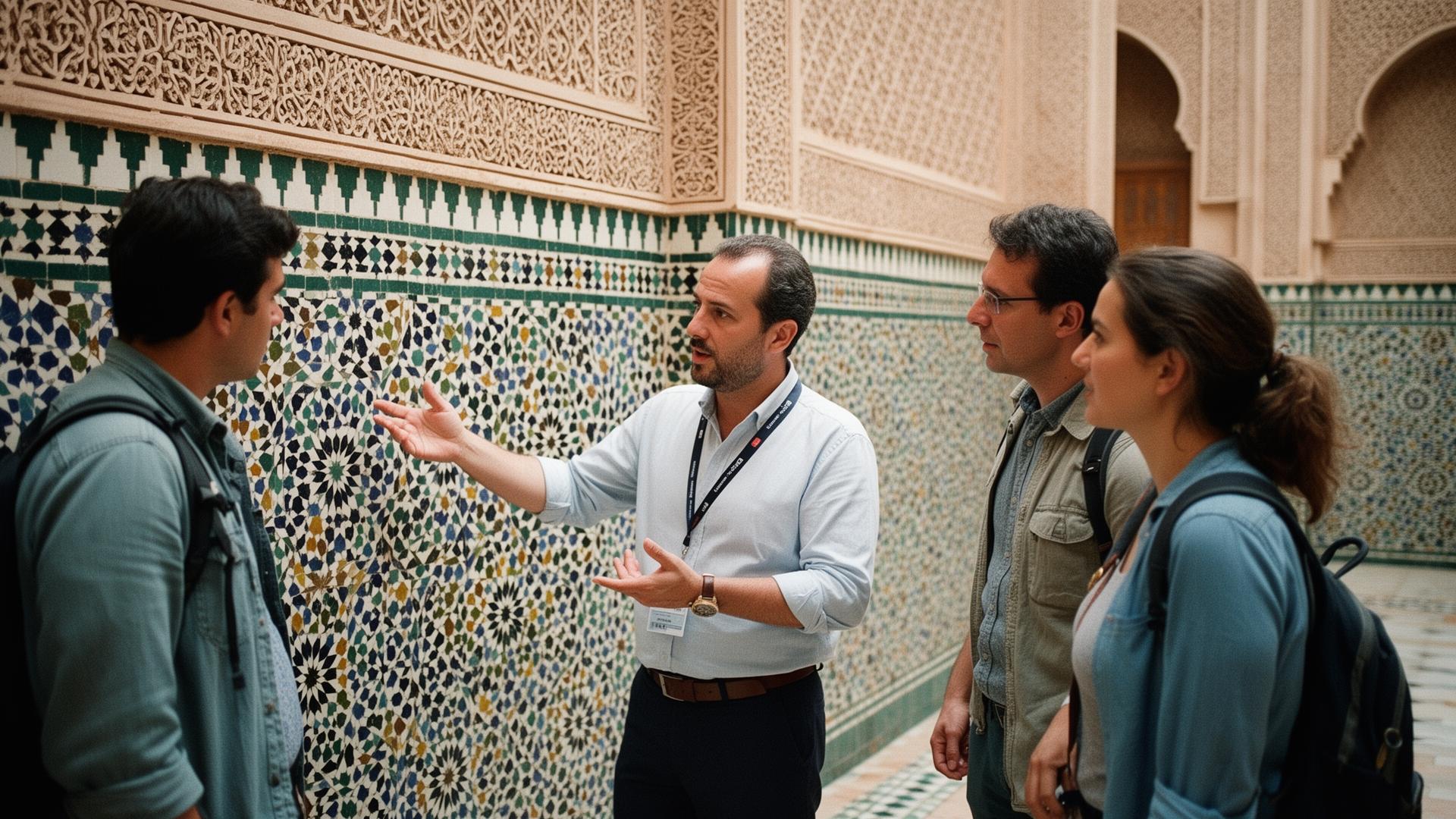
Casablanca is Morocco's economic capital and largest city — a modern, cosmopolitan metropolis built on Atlantic commerce rather than imperial history. Its centrepiece, the Hassan II Mosque, is among the most extraordinary buildings in the world, and the city's restaurants, Corniche and Art Deco architecture reward those who linger beyond the airport transfer.
In this guide
What are the must-see sights in Casablanca?
The Hassan II Mosque is the reason most travellers stop in Casablanca rather than transferring directly to Marrakech or Fes — and it justifies the stop entirely. Completed in 1993 and built on a headland over the Atlantic, it is the third-largest mosque in the world (after Mecca and Medina) and the largest open to non-Muslim visitors in Morocco. The minaret reaches 210 m — the world's tallest — and its tip projects a laser towards Mecca visible from 50 km at night. Guided tours of the interior (MAD 170 per adult, approximately US$17, run outside prayer times) reveal a prayer hall of extraordinary craftsmanship: hand-carved cedarwood ceilings, zellij tile floors, onyx columns and a retractable roof.
The Corniche d'Ain Diab — the Atlantic seafront boulevard stretching west from the mosque — is where Casablancans spend their weekends: lined with beach clubs, fish restaurants and café terraces. The Morocco Mall and twin towers of the financial district mark the modern city's scale, but the Habous quarter (the Nouvelle Médina), built by French colonial planners in the 1930s in a deliberate Moroccan architectural style, is the most architecturally coherent pedestrian quarter: a planned medina with a central souk of pastisseries, bookshops and leather goods at calmer prices than Marrakech.
- Hassan II Mosque — third-largest mosque in the world; open to non-Muslims for guided tours; minaret 210 m.
- Corniche d'Ain Diab — Atlantic seafront boulevard; beach clubs, restaurants, evening promenade.
- Habous quarter — 1930s planned 'new medina'; pastisseries, bookshops, pastry shops.
- Old Medina and Central Market — Casablanca's historic core; smaller and less intense than Marrakech or Fes.
- Villa des Arts — contemporary art space in a 1934 colonial villa; changing exhibitions.
- Place Mohammed V — central Beaux-Arts square; French Protectorate administrative buildings.
What Art Deco architecture can you see in Casablanca?
Casablanca contains one of the world's largest and best-preserved concentrations of Art Deco architecture, built during the French Protectorate period (1912–1956). The buildings concentrated around the Centre-Ville, particularly along Boulevard Mohammed V and around Place des Nations Unies, represent a hybrid style sometimes called Mauresque or Moroccan Art Deco — European Deco forms combined with Moroccan ornamental details: carved plasterwork, zellige tiles, keyhole arches and cedar screens.
A self-guided walking tour taking in the Central Post Office (a 1918 Mauresque landmark), the former Hôtel Lincoln, the Cathédrale du Sacré-Cœur (now a cultural centre), and the apartment buildings along Rue du Prince Moulay Abdallah takes approximately 90 minutes and reveals a city layer entirely invisible to the transit traveller. The association Casa-Mémoire runs guided Art Deco tours in French and Arabic on specific weekends.
What is the food scene like in Casablanca?
Casablanca's restaurant scene is the most sophisticated in Morocco: a large resident business and diplomatic community, combined with the largest Moroccan diaspora return traffic of any city, has produced a diverse range of restaurants from street tagine to contemporary Moroccan fine dining. The Corniche area has the highest concentration of good fish restaurants; La Sqala (within the old city walls near the medina) is a much-loved traditional Moroccan kitchen in a historic fort setting. Chez El Bab in the Habous quarter specialises in pastilla and traditional Fassi cuisine.
For fresh seafood, the Central Market (Marché Central) on Rue Chaouia has a fish hall where the Atlantic catch is displayed each morning. Several attached grill restaurants cook your selected fish at the market stalls immediately next door — one of the best-value fish lunches in the country. Budget approximately MAD 100–180 for a full grilled fish meal with bread and salad.
How long should you spend in Casablanca and how do you get there?
One night and one full day is comfortable for the Hassan II Mosque, the Corniche, the Habous quarter and an Art Deco walk. Two nights allows a more relaxed pace and an evening on the Corniche, which is at its most atmospheric around sunset. Casablanca is not a city that demands the same medina-depth investment as Fes or Marrakech, but it is not merely an airport transit either.
Mohammed V International Airport (CMN) is the main international hub for Morocco, 30 km south-east of the city. The airport train (Casa Voyageurs station, every 30 minutes, approximately 45 minutes) is the easiest connection. Taxis from the airport to the centre take 30–45 minutes in traffic. Al Boraq high-speed trains connect Casablanca to Rabat (45 minutes), Tangier (2 hours) and (via a change) to Fes and Marrakech.
- Airport train: CMN to Casa Voyageurs, approximately 45 minutes, every 30 minutes.
- To Rabat: Al Boraq, 45 minutes.
- To Marrakech: ONCF train, approximately 4 hours.
- To Fes: ONCF, approximately 4 hours via Rabat.
- Recommended stay: 1–2 nights as part of a wider Morocco itinerary.
Frequently asked
Is Casablanca worth visiting in Morocco?
Yes, primarily for the Hassan II Mosque — one of the most extraordinary buildings in the world and unmissable even for non-religious travellers. The Corniche, Art Deco architecture and food scene add further value. It is not an imperial medina city, but travellers who engage with it rather than transit through it find it genuinely interesting.
Can non-Muslims visit the Hassan II Mosque?
Yes — it is one of the very few mosques in Morocco open to non-Muslim visitors. Guided tours run outside prayer times (typically 9:00, 10:00, 11:00 and 14:00; not Friday mornings). Admission is approximately MAD 170 (around US$17). Modest dress is required: covered shoulders and knees for all; no shorts.
What is the Habous quarter in Casablanca?
The Habous (or Nouvelle Médina) is a planned neighbourhood built by French colonial urban planners in the 1930s in a deliberate Moroccan architectural style — the inverse of European colonial planning that usually imposed European layouts. The result is a calm, grid-planned pedestrian quarter with a central souk of pastisseries, bookshops and traditional shops at considerably calmer prices than the tourist souks of Marrakech. The Royal Palace is adjacent.
Is Casablanca safe for tourists?
Yes — Casablanca is a large modern city with the usual urban considerations. The Hassan II Mosque, Corniche and Habous quarter are all straightforwardly safe in the daytime. Use the same common sense you would in any large city: watch your belongings in crowded areas, use arranged transport rather than unmarked taxis after dark, and keep copies of your documents.
How does Casablanca compare to Marrakech as a destination?
They are fundamentally different cities. Marrakech offers the classic Morocco experience — a medieval medina, a legendary square, souks, riads and the High Atlas on the doorstep. Casablanca is a modern commercial capital with outstanding architecture (the Hassan II Mosque above all), a sophisticated food and nightlife scene, and almost no historic medina to speak of. Most visitors benefit from experiencing both rather than choosing between them.
Planning a trip?
Let a Marrakech atelier handle the details.
Tell us your dates and style and we'll send a written itinerary and a transparent quote within 24 hours.
Request an itineraryKeep reading
Planning
Things to Do in Rabat: The Essential Guide
Rabat, Morocco's understated capital, rewards visitors with UNESCO-listed monuments, a royal kasbah, Roman ruins and a genuine daily-life rhythm entirely free from the tourist pressure of Marrakech or Fes.
Planning
Things to Do in Marrakech: The Essential Guide
Marrakech is sensory overload in the best possible way — a medieval medina, world-class gardens, hammam rituals, rooftop dinners and a square that transforms nightly into one of the world's great open-air spectacles. Here is where to spend your time.
Practical
Getting Around Morocco
Morocco has good trains between the main northern cities, comfortable intercity buses, and — for the south, the mountains and the desert — private drivers. The right mix depends on your route and pace.
Itineraries
Morocco Itinerary: 10 Days
Ten days is the sweet spot for Morocco — long enough to combine Marrakech, the Sahara and the imperial north in one unhurried loop, with the coast as an optional finish.