Travelling to Morocco with a baby or toddler is entirely possible and often surprisingly smooth — Moroccan culture is genuinely warm towards small children, riads can be made to work, and the practical logistics are manageable with the right preparation.
In this guide
Is Morocco suitable for babies and toddlers?
Morocco is more baby-friendly than many first-time parents expect. Moroccan culture places enormous value on children — babies and toddlers are fussed over, welcomed into restaurants without a second glance, and often attract warm attention from strangers. This is genuinely different from the tolerance-but-mild-indifference common in northern European cities. You will not feel unwelcome with a pram in a Marrakech café.
The practical challenges are real but manageable. The medina lanes of Marrakech and Fes are cobbled, narrow and frequently stepped — pushchairs are almost useless in most sections. A baby carrier or front-facing sling is essential. The heat in summer (July–August) inland is genuinely too extreme for babies and toddlers; spring (March–May) and autumn (September–November) are the ideal windows.
What type of accommodation works with a baby or toddler?
A riad with an enclosed courtyard is the best accommodation choice for families with babies and toddlers. The enclosed space is safe — there is no traffic, no strangers, no hazards beyond the riad's own features — and gives small children a space to move around while adults can relax. Check for pools and staircases before booking: some riads have ornamental courtyard basins that are shallow and safe; others have deep, unfenced plunge pools that require constant supervision. Traditional riad staircases are often steep, open-sided and spiral — a genuine hazard for toddlers; ask specifically.
If the riad's staircase configuration is not suitable, the modern hotel resorts in Agadir and Marrakech's Palmeraie offer more conventional family-friendly facilities: lifts, gated pools with shallow ends, and ground-floor family rooms. These suit families where the beach or pool is the primary objective and medina exploration is secondary.
- Riad with enclosed courtyard: safest for toddler mobility; check pool depth and staircase before booking.
- Request a ground-floor room: many riads can accommodate this and it removes staircase anxiety entirely.
- Agadir resort hotels: most practical for babies; pool and beach infrastructure designed for families.
- Ask about a cot: most riads and hotels can provide one on request; confirm in advance.
What about food and water for babies and toddlers?
Moroccan food is largely baby- and toddler-friendly in its basic form — mild tagines, soft-cooked couscous, flatbread, fresh fruit, yoghurt and pastries cover most of what a small child will eat. The key adjustments are: request no spice (most riads and restaurants will adapt willingly), stick entirely to bottled water for drinking and for mixing formula, and bring pre-measured formula powder in labelled bags if formula-feeding.
Moroccan pharmacies (farmacie) in the major cities are well-stocked with European-brand baby and toddler supplies — formula, nappies, wipes, infant paracetamol and rehydration sachets are all readily available in Marrakech and Casablanca. Stock up in the city before heading to the Atlas or the desert, where pharmacy access is limited.
- Bottled water only: for drinking, formula mixing and brushing teeth; tap water risk is not worth it for babies.
- Pharmacies: Marrakech and Casablanca have European baby brands; stock up before rural travel.
- High chair: available in most tourist-facing restaurants; carry a portable travel seat as backup.
- Baby-led weaning: Morocco's food culture adapts well — soft tagine vegetables, flatbread and mashed chickpea are natural options.
Getting around Morocco with a baby or toddler
Private transport is essentially non-negotiable for families with babies and toddlers. A private car with a driver allows you to stop when the baby needs feeding or a nappy change, manage the pace of each day, carry everything you need, and avoid the stress of public transport connections with a toddler. A rear-facing infant car seat or a forward-facing toddler seat should be arranged with your driver in advance — most private drivers with family experience can provide or source an appropriate child seat, but confirm this explicitly before departure.
In the medinas, a soft-structured baby carrier or a lightweight sling is the only practical option — prams are impossible on cobblestones and steps. A toddler carrier (with a hip seat for a heavier child) extends the range considerably. Taxis within cities can accommodate a car seat if you bring one; book a private taxi rather than a street cab when travelling with a baby.
Where to base yourself in Morocco with a baby or toddler
Marrakech is the most practical first base — the widest riad selection, the best restaurant infrastructure, short day-trip distances to the Atlas foothills, and an international airport with direct flights from most European cities. The Ourika Valley (45 minutes) and the Palmeraie camel rides are both manageable half-day excursions with a toddler.
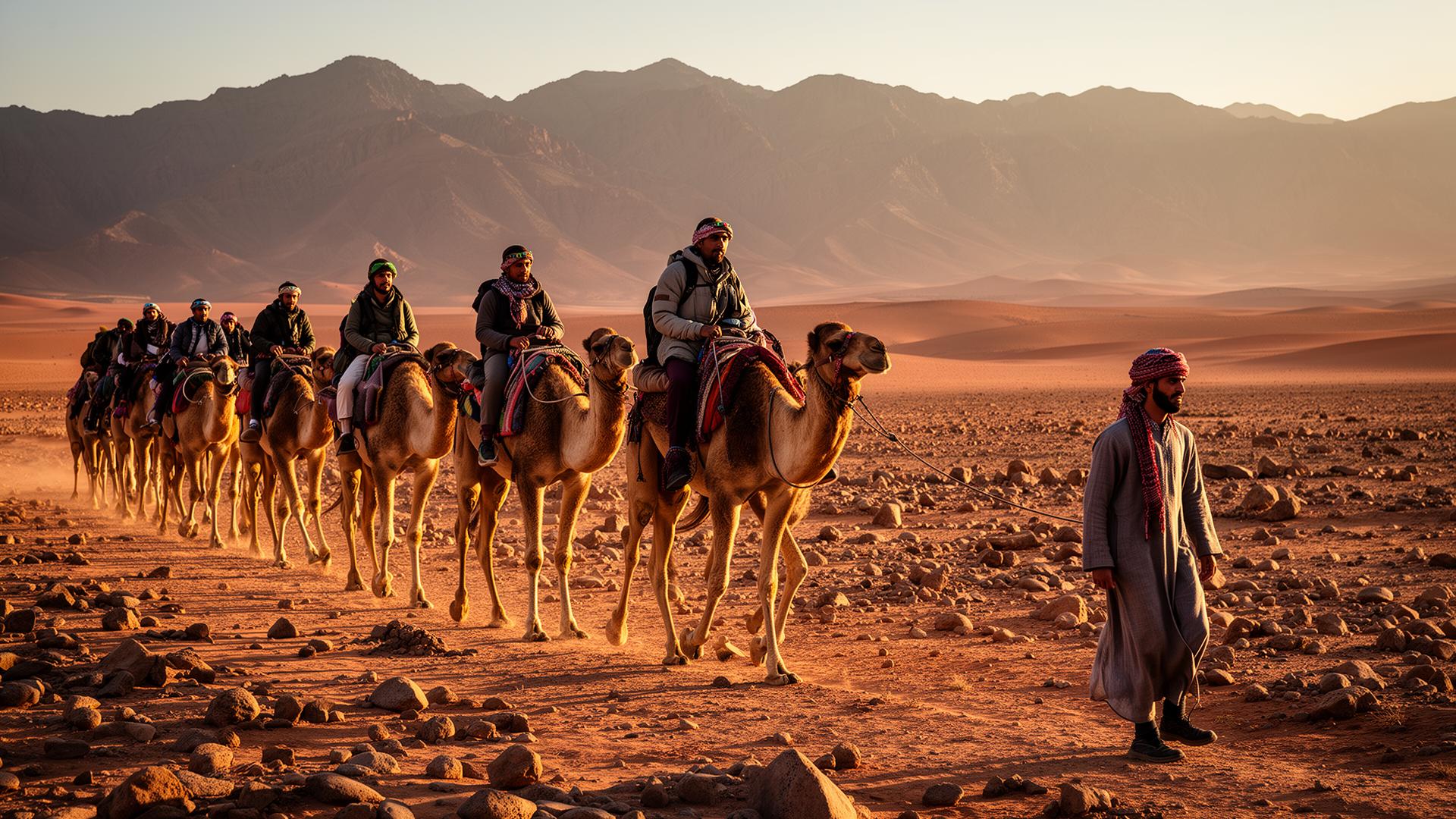
Agadir is the most straightforwardly easy destination — a beach resort with calm, safe swimming, resort hotel infrastructure and a relaxed pace that suits babies and toddlers perfectly. Essaouira is rewarding but windier; the medina is very walkable with a carrier. Avoid the Sahara and any extended desert camping with children under about 4 — the heat, the cold nights and the limited sanitation at budget camps make the experience actively unpleasant rather than magical at this age.
Frequently asked
How hot is Morocco for babies and toddlers?
Summer inland (July–August) is too hot for babies and toddlers — Marrakech regularly exceeds 38°C, which is genuinely dangerous for infants. Spring (March–May) and autumn (September–November) are the ideal windows, with temperatures of 20–28°C in the cities. The Atlantic coast (Agadir, Essaouira) is significantly cooler in summer: 22–25°C at Essaouira and 24–28°C at Agadir.
Can you take a pram in Marrakech's medina?
A pushchair is nearly useless in the Marrakech medina. The lanes are cobbled, narrow, frequently stepped and crowded — and the medina's charm is its density, which a pram actively fights. A soft-structured baby carrier (front carry for infants; back carry for toddlers) is the only practical option for medina exploration. Leave the pram at the riad.
Is it safe to take a baby to Morocco?
Yes, with standard precautions: bottled water only, careful hygiene with food, sun protection and avoiding the hottest inland months. Morocco's medical infrastructure in Marrakech and Casablanca is adequate for most situations; carry your travel insurance emergency number and know the location of the nearest private clinic. The country is not more dangerous for babies than any Mediterranean or North African destination.
Can you get nappies and baby formula in Morocco?
Yes — Marrakech, Casablanca, Fes and Agadir all have pharmacies and supermarkets stocking European-brand nappies (Pampers, Huggies), formula (Aptamil, Nestlé NAN) and baby food pouches. Stock up in any major city before heading to the Atlas, the Sahara or rural areas, where availability is limited.
What age is the Sahara suitable for children?
We recommend the Sahara from about 4–5 years old — old enough for a short camel ride, the excitement of the dunes and a night in a proper camp bed. Babies and toddlers under 3 would experience the heat, the dust, the long drives and the cold nights without deriving any magic from the desert itself. Save the Sahara for when they will remember it.
Planning a trip?
Let a Marrakech atelier handle the details.
Tell us your dates and style and we'll send a written itinerary and a transparent quote within 24 hours.
Request an itineraryKeep reading
Planning
Morocco with Kids: A Family Travel Guide
Morocco works beautifully with children — riads have private courtyards, camels enchant every age, and Moroccan culture is genuinely warm towards families. Pacing and planning are everything.
Planning
The Best Time to Visit Morocco
Spring (March–May) and autumn (September–November) are the best all-round times to visit Morocco — warm days, cool evenings and ideal conditions for the medinas, mountains, coast and desert alike.
Planning
Where to Stay in Morocco: Riads, Hotels & Desert Camps
Morocco offers one of the world's great accommodation experiences — from intimate medina riads with plunge pools and private chefs to luxury Sahara tented camps and Atlantic coast boutique hotels. Knowing which type suits your trip, and what to look for in each, makes a significant difference.