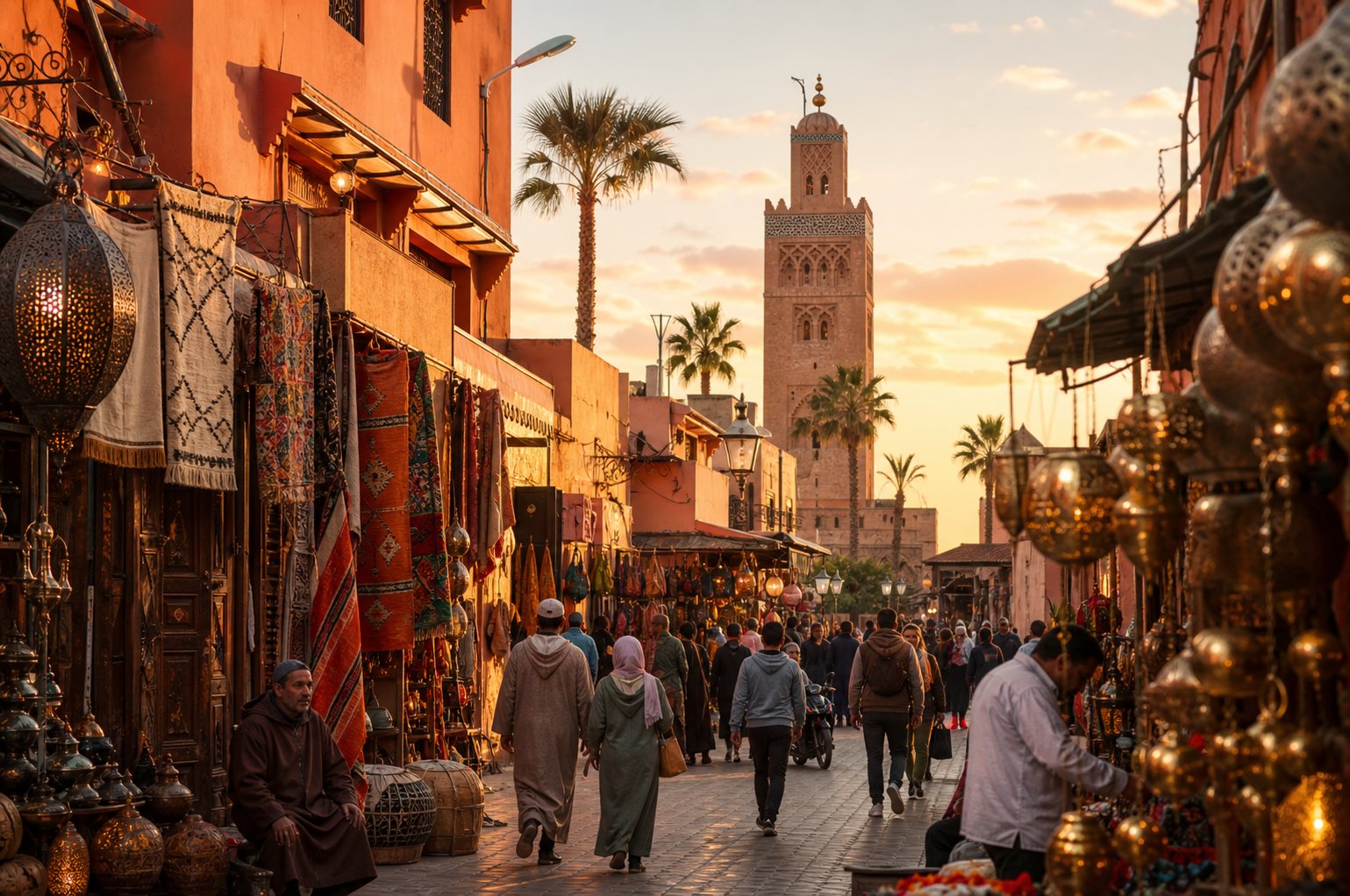
Some of the best eating in Morocco happens standing up, on a busy corner or a smoky food stall, for the price of a coffee back home. This guide covers the must-try street foods — msemen and harcha breads, sfenj doughnuts, maakouda potato fritters, harira and bissara soups, snails, grilled sardines and brochettes, khobz sandwiches, fresh orange juice, dates and sweets, and of course mint tea — plus where to find them, from Marrakech's Jemaa el-Fna at night to medina stalls, weekly markets and roadside grills, and how to eat it all without an upset stomach.
In this guide
Breads, pancakes and fried things
Morocco's street breakfast and snack repertoire is built around griddled and fried doughs, and it's the easiest place to start. Most of these are cooked to order on a hot plate or in a vat of oil right in front of you, which is exactly what you want — hot, fresh and quick.
Msemen is the star: a square, flaky, laminated pancake folded over and over and cooked on a griddle until crisp at the edges and soft inside. It's eaten plain, dunked in honey or melted butter, drizzled with amlou (the almond-argan-honey spread of the south), or stuffed with onion and spice. Harcha, its cousin, is a thick, pan-fried semolina bread with a crumbly cornbread-like texture, usually split and spread with butter, honey or jam. Sfenj are Moroccan doughnuts — rings of airy, slightly chewy dough fried fresh, sold by the string and best eaten warm with sugar; they're a classic morning or late-afternoon treat. Maakouda are spiced mashed-potato fritters, dipped in batter and deep-fried, often tucked into a khobz sandwich with harissa and olives.
- Msemen — square, flaky folded pancake; eat with honey, butter or amlou.
- Harcha — pan-fried semolina bread, split and spread with butter, honey or cheese.
- Sfenj — light, chewy Moroccan doughnuts fried fresh and dusted with sugar.
- Maakouda — deep-fried spiced potato fritters, great in a sandwich.
Soups: harira, bissara and snails
Soup is serious street food in Morocco, ladled from big pots and eaten any time of day. Harira is the famous one — a hearty tomato-based soup with lentils, chickpeas, herbs and often a little meat, thickened with flour or egg. It's eaten year-round but comes into its own in Ramadan, when it traditionally breaks the fast each evening, usually alongside dates and sweet chebakia.
Bissara (also written b'sara) is the humbler, heartier counterpart: a thick purée of dried fava beans (or split peas), finished with a generous pour of olive oil, a dusting of cumin and paprika and a squeeze of bread to scoop it. It's a winter-morning staple, especially in the north and in Fez, sold cheaply from small stalls. Then there's babbouche — snail soup — simmered in a fragrant broth of many spices and herbs and served in little bowls with a pin to extract the snails. Sold from steaming cauldrons in Marrakech and beyond, it's an acquired taste with a devoted local following and is reputed to be good for digestion and colds.
- Harira — tomato, lentil and chickpea soup; the classic Ramadan fast-breaker.
- Bissara / b'sara — thick fava-bean purée with olive oil, cumin and paprika; a winter breakfast.
- Babbouche — spiced snail soup, sipped from a bowl with a pin; an adventurous local favourite.
From the grill: sardines, brochettes and merguez
Smoke is the giveaway: follow it to the grills. On the coast — Essaouira, Agadir, the fishing ports — fresh sardines are the icon, butterflied, lightly spiced and grilled over charcoal, sometimes packed into chermoula-marinated sandwiches. They're cheap, plentiful and superb when cooked fresh, and a stall with a steady queue is the one to pick.
Inland and everywhere, brochettes — small skewers of marinated lamb, beef, chicken or liver (kefta brochettes are minced and spiced) — sizzle over coals and are served with bread, cumin, salt and a fiery harissa or tomato-onion salad. Merguez, the spicy red lamb-and-beef sausage, is a street-grill staple in its own right, eaten in a sandwich or off the skewer. This is the heart of the Jemaa el-Fna night-market experience, where rows of grill stalls fire up after sunset.
- Grilled sardines — fresh, charcoal-grilled, best on the coast; look for high turnover.
- Brochettes — skewers of lamb, beef, chicken, liver or spiced kefta with bread and cumin.
- Merguez — spicy lamb-and-beef sausage, grilled and stuffed into khobz.
- Khobz sandwiches — round Moroccan bread filled with grilled meat, maakouda, salad, olives and harissa.
Drinks, fruit and sweets
No street-food crawl is complete without the trimmings. Fresh orange juice, squeezed to order at the rows of bright juice carts on Jemaa el-Fna and in every market, is a Moroccan ritual — cheap, vivid and refreshing; agree the price first and watch it pressed in front of you. Dates and dried fruit and nuts, piled high in glossy pyramids at the souks, range from everyday to the prized Medjool, and a handful makes the perfect walking snack (they're also the traditional way to break the Ramadan fast).
For something sweet, chebakia — sesame-coated, honey-soaked flower-shaped pastries, especially abundant in Ramadan — sit alongside briouats (sweet fried pastries), sellou and trays of honeyed treats. And running through all of it is mint tea: green tea brewed strong with handfuls of fresh mint and plenty of sugar, poured from a height to build a foam. It's offered everywhere, often as a gesture of hospitality, and is the natural full stop to any street meal.
- Fresh orange juice — squeezed to order; agree the price before you order.
- Dates & dried fruit and nuts — sold loose in the souks; ideal walking snacks.
- Chebakia & sweets — sesame-honey pastries, briouats and trays of honeyed treats, big in Ramadan.
- Mint tea — strong green tea with mint and sugar, poured from height; the hospitality drink.
Where to find it
The most famous street-food stage is Jemaa el-Fna in Marrakech, which transforms after dusk into a vast open-air food court — grill stalls, snail-soup cauldrons, juice carts and benches under the smoke and lights. It's touristy and the numbered stalls compete hard for your attention, but it's a genuine spectacle and the food can be very good; pick a busy stall, ignore the hard sell and check prices.
Beyond the square, the best everyday street food is in the medina lanes and around the gates, at the weekly souks (rural market days) and in working neighbourhoods away from the tourist core — that's where locals queue for sfenj in the morning, bissara in winter and brochettes at lunch. On the road, roadside grills and café-restaurants between cities are a reliable bet for a hot, freshly cooked skewer-and-bread meal. As a rule, the busier and more local the stall, the fresher and better the food.
- Jemaa el-Fna, Marrakech — the night food market; a spectacle, busy and best after sunset.
- Medina stalls & city gates — everyday breads, soups and grills where locals eat.
- Weekly souks (market days) — rural markets with the most authentic, seasonal street food.
- Roadside grills — dependable hot meals on long drives between cities.
Eating street food safely
Street food in Morocco is one of the highlights of a trip, and a few simple habits keep it that way. The golden rule is turnover: a busy, popular stall sells out and restocks constantly, so the food is fresher and has spent less time sitting around. Eat things hot and freshly cooked off the grill or out of the fryer rather than anything lukewarm that's been standing.
For fruit, favour items you peel yourself — oranges, bananas — and be a little more cautious with cut or pre-prepared salads. Stick to bottled or properly treated water and use it for drinks and ice unless you know the source, since tap water can upset unaccustomed stomachs even where locals drink it. With juice and grills, settle the price before you order so there are no surprises, and don't be shy about choosing the stall with the longest local queue — it's usually the tastiest and the safest bet.
- Busy, popular stalls = high turnover = fresher food. Follow the local queues.
- Eat it hot — straight off the grill or out of the fryer, not lukewarm.
- Peel your own fruit; be cautious with pre-cut salads.
- Drink bottled or treated water; be wary of ice from unknown sources.
- Agree the price first, especially for juice, grills and at tourist-heavy stalls.
Frequently asked
What street food should I try in Morocco?
Start with msemen (flaky folded pancake) and harcha (semolina bread) with honey, sfenj doughnuts and maakouda potato fritters; harira and bissara soups; grilled sardines on the coast and brochettes or merguez from the grill; a khobz sandwich; fresh orange juice; dates and chebakia sweets; and always mint tea. For the adventurous, try babbouche (snail soup).
Where is the best street food in Morocco?
Marrakech's Jemaa el-Fna after dark is the famous one — a huge open-air grill-and-soup market. But some of the best everyday street food is in the medina lanes, at the weekly rural souks and in working neighbourhoods, plus roadside grills between cities. The rule everywhere: the busiest, most local stall is usually the best.
Is street food safe to eat in Morocco?
Generally yes, if you're sensible. Choose busy stalls with high turnover, eat food hot and freshly cooked, peel your own fruit, drink bottled or treated water, and be cautious with ice and pre-cut salads. Following the local queues is both the tastiest and the safest strategy.
How much does street food cost in Morocco?
Street food is inexpensive — typically a few dirhams to a modest sum for a snack, soup, sandwich or juice — but prices vary by place and aren't always posted, and tourist-heavy spots like Jemaa el-Fna can charge more. Agree the price before you order, especially for juice and grills, to avoid surprises.
Planning a trip?
Let a Marrakech atelier handle the details.
Tell us your dates and style and we'll send a written itinerary and a transparent quote within 24 hours.
Request an itineraryKeep reading
Culture
Moroccan Food & Drink
Moroccan cuisine is one of the world's great food cultures: slow-cooked tagines, couscous Fridays, fresh-grilled seafood on the coast, and the endless ritual of sweet mint tea.
Planning
Things to Do in Marrakech: The Essential Guide
Marrakech is sensory overload in the best possible way — a medieval medina, world-class gardens, hammam rituals, rooftop dinners and a square that transforms nightly into one of the world's great open-air spectacles. Here is where to spend your time.
Practical
Is Tap Water Safe to Drink in Morocco?
Tap water in Morocco is treated and technically meets national standards in the major cities, but travellers — particularly on short visits — are strongly advised to drink bottled or filtered water. Stomach upsets from the change in local bacteria are common even when the water is not technically contaminated.
Practical
Staying Healthy in Morocco: A Practical Travel-Health Guide
Most visitors travel Morocco without any health trouble at all, and a few simple habits keep it that way: drink bottled or filtered water, be sensible with food early on, respect the sun and heat, and carry a small kit. This is general guidance for healthy travellers, not medical advice — for vaccinations, antimalarials and any personal medical concern, consult a doctor or a travel-health clinic well before you go, and check your government's official travel-health advice.