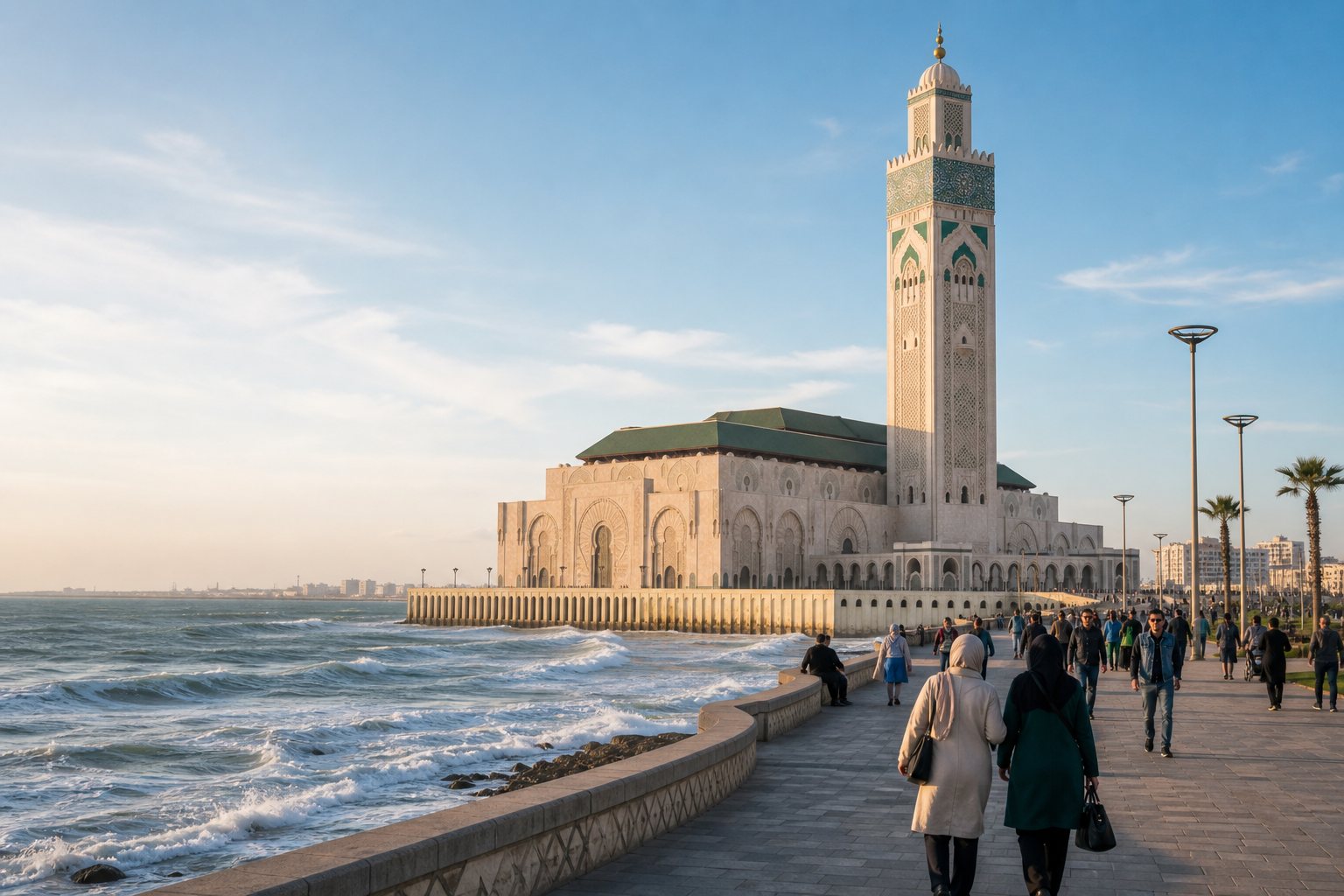
Can you drink in Morocco, and is there a nightlife scene? The honest answer is yes to both — Morocco is a Muslim-majority country, but alcohol is legal and available to visitors and locals in licensed restaurants, hotels, bars and clubs, and some supermarkets and specialist shops. It's simply consumed discreetly rather than in the street or the medina. Here's how going out really works: where to drink and dance city by city, the discreet-but-legal reality, hotel and restaurant versus club scenes, what changes during Ramadan, and how to enjoy it respectfully.
In this guide
Can you drink alcohol in Morocco? The honest answer
Yes — and this is one of the most common questions visitors ask. Morocco is a Muslim-majority country where most people don't drink, but alcohol is entirely legal. It's produced domestically (Morocco has a real wine industry around Meknès, plus local beer), imported, and sold openly through licensed channels. Both visitors and Moroccans drink, just not everywhere and not in plain public view.
The key word is discreet, not hidden. You will find wine, beer and spirits in licensed restaurants, hotel bars and restaurants, dedicated bars and clubs, and a dedicated section of some larger supermarkets, as well as specialist drinks shops in the bigger cities and tourist areas. What you won't typically find is alcohol in small neighbourhood cafés, inside the historic medinas, in conservative rural areas, or being drunk in the street — and drinking in those public settings is socially out of step and best avoided.
- Legal and available — in licensed restaurants, hotels, bars, clubs and some supermarkets/drinks shops.
- Consumed discreetly — not in the street, public squares, the medina or near mosques.
- The legal drinking age is 18; carry ID, as licensed venues and shops may ask.
- Most cafés and small local eateries don't serve alcohol at all — that's normal, not a snub.
Where the nightlife is — by city
Morocco's going-out scene is concentrated in a handful of cosmopolitan and resort cities. The flavour varies a lot: Casablanca is the most urban and clubby, Marrakech leans toward rooftop lounges and glamour, and the Atlantic resorts are more relaxed. Outside these hubs, expect nightlife to mean a hotel bar or a quiet restaurant rather than a club.
Specific venues open, close and change hands constantly, so rather than name bars and clubs that may no longer exist, it's wiser to ask your riad, hotel concierge or a local for what's currently good. The neighbourhoods below are the reliable starting points.
- Casablanca — the most cosmopolitan scene: clubs and bars along the Ain Diab seafront and Corniche, plus a notable live-jazz and music culture in the city.
- Marrakech — rooftop bars, lounges and clubs concentrated in the Hivernage and Gueliz districts (the modern new town), rather than the medina.
- Agadir & Taghazout — relaxed resort bars and a few clubs; an easygoing, beach-town feel rather than a dressy big-city scene.
- Tangier — a long café and bar tradition with some clubs, reflecting the city's cosmopolitan history.
- Rabat — the capital has bars and some clubs, generally lower-key than Casablanca or Marrakech.
Hotel and restaurant bars vs the club scene
For many visitors the easiest and most comfortable way to have a drink is in a hotel or a licensed restaurant. International and tourist-oriented hotels almost always have a bar, often a rooftop or poolside one, and licensed restaurants — including many tourist-facing riads — will have a wine list or can serve beer and spirits. This is the low-key, no-fuss end of the spectrum, and a glass of Moroccan wine with dinner is an easy way to taste the local product.
The dedicated club scene — late-opening venues with DJs, live acts and dancing — exists mainly in Casablanca and Marrakech, with a lighter version in the coastal resorts. Clubs tend to start late, can be dressy, and are pricier than a simple bar. Alongside the imported club sound, look out for live Moroccan and world music, including Gnaoua — the hypnotic, trance-driven music of southern Morocco that surfaces in lounges, festivals and dedicated nights and is one of the country's most distinctive live experiences.
- Easiest option — a drink at a hotel bar or licensed restaurant, no scene required.
- Clubs — concentrated in Casablanca and Marrakech; late, sometimes dressy, more expensive.
- Live music — Gnaoua and world-music nights are a highlight worth seeking out.
Ramadan changes everything
During the holy month of Ramadan, the rhythm of going out shifts dramatically. Alcohol sales to the public are typically restricted: many shops and supermarket sections stop selling it or curtain it off, and a lot of venues that normally serve alcohol pause or limit it. Tourist hotels often continue to serve their guests, but expect reduced availability and a much quieter atmosphere overall.
Nightlife in the conventional sense is subdued during Ramadan daylight and recalibrated around the evening: life comes alive after the fast is broken at sunset, with late meals and sociable evenings, but the bar-and-club scene is markedly toned down. If a lively night out is central to your trip, it's worth checking when Ramadan falls (it moves about eleven days earlier each year) and planning around it.
- Alcohol sales to the public are usually restricted; supermarket sections may be closed off.
- Many bars and clubs pause or limit service; tourist hotels often still serve guests, but quietly.
- Evenings revolve around breaking the fast and late meals rather than clubbing.
Respectful etiquette when you go out
Enjoying a drink and a night out in Morocco is perfectly acceptable in the right setting — the etiquette is simply about reading the room. Keep drinking to licensed venues and private settings; don't drink or carry open alcohol in the street, public squares, the medina or near religious sites. Being visibly drunk in public is genuinely frowned upon and can attract trouble, so pace yourself and keep things low-key.
Dress and behaviour matter too. Cities have a relaxed, modern feel in their nightlife districts, but Morocco is broadly conservative, so modest dress is appreciated outside resort and club settings, and overt public displays are best kept private. Follow the lead of the licensed venue you're in, be considerate of staff and other guests who may be fasting or not drinking, and you'll find the experience both legal and comfortably within local norms.
- Drink in licensed venues; never in the street, the medina or near mosques.
- Don't be visibly drunk in public — it's disrespectful and can cause problems.
- Dress modestly outside resort and club settings; the legal drinking age is 18.
- Take your cue from the venue and be considerate of those around you.
Frequently asked
Can you drink alcohol in Morocco as a tourist?
Yes. Alcohol is legal and available to both visitors and Moroccans in licensed restaurants, hotel bars, dedicated bars and clubs, and some larger supermarkets and specialist drinks shops. As a Muslim-majority country, though, it's consumed discreetly — not in the street, the medina or public squares — and the legal drinking age is 18.
Is there nightlife in Morocco?
Yes, mainly in the bigger and more cosmopolitan cities. Casablanca has the liveliest scene (clubs and bars along the Ain Diab seafront and Corniche, plus jazz), Marrakech has rooftop bars, lounges and clubs in Hivernage and Gueliz, and Agadir, Taghazout, Tangier and Rabat all have bars and some clubs. Elsewhere, nightlife usually means a hotel bar or a relaxed dinner.
Where can I buy alcohol in Morocco?
In licensed restaurants and hotel bars to drink on site, and to take away from a dedicated section of some larger supermarkets and from specialist drinks shops in the bigger cities and tourist areas. Small cafés, most medina eateries and conservative rural areas generally don't sell it. Availability is restricted during Ramadan.
Can you drink alcohol during Ramadan in Morocco?
It's much harder. During Ramadan, alcohol sales to the public are typically restricted — many shops stop selling it or curtain it off, and venues that normally serve it often pause or limit service. Tourist hotels frequently still serve their guests, but availability is reduced and the nightlife is subdued.
Is it disrespectful to drink in Morocco?
Not in the right setting. Drinking in licensed restaurants, hotels, bars and clubs is normal and accepted. What's disrespectful is drinking in the street, the medina or near mosques, or being visibly drunk in public. Keep it discreet and low-key and you'll be well within local norms.
Planning a trip?
Let a Marrakech atelier handle the details.
Tell us your dates and style and we'll send a written itinerary and a transparent quote within 24 hours.
Request an itineraryKeep reading
Culture
Morocco Etiquette & Customs
A little cultural awareness goes a long way in Morocco. Dress modestly, greet warmly, ask before photographing people, use your right hand, and embrace the unhurried pace of mint tea and conversation.
Planning
Travelling in Morocco During Ramadan
Ramadan transforms the rhythm of Morocco in ways that can be unexpectedly wonderful — late-night medinas, spectacular breaking-fast meals, a sense of community. The key is knowing what changes and planning around it.
Culture
Moroccan Food & Drink
Moroccan cuisine is one of the world's great food cultures: slow-cooked tagines, couscous Fridays, fresh-grilled seafood on the coast, and the endless ritual of sweet mint tea.
Culture
Morocco Wine & Vineyards: Regions, Styles & Tastings
Morocco has a long, French-influenced winemaking tradition centred on the Meknès region, where vineyards on the Zerhoun foothills produce reds and rosés — including the country's signature pale, dry "gris". Here's how Moroccan wine works: the regions, the styles, visiting an estate, where you can buy and drink it, and the cultural etiquette in a Muslim-majority country.