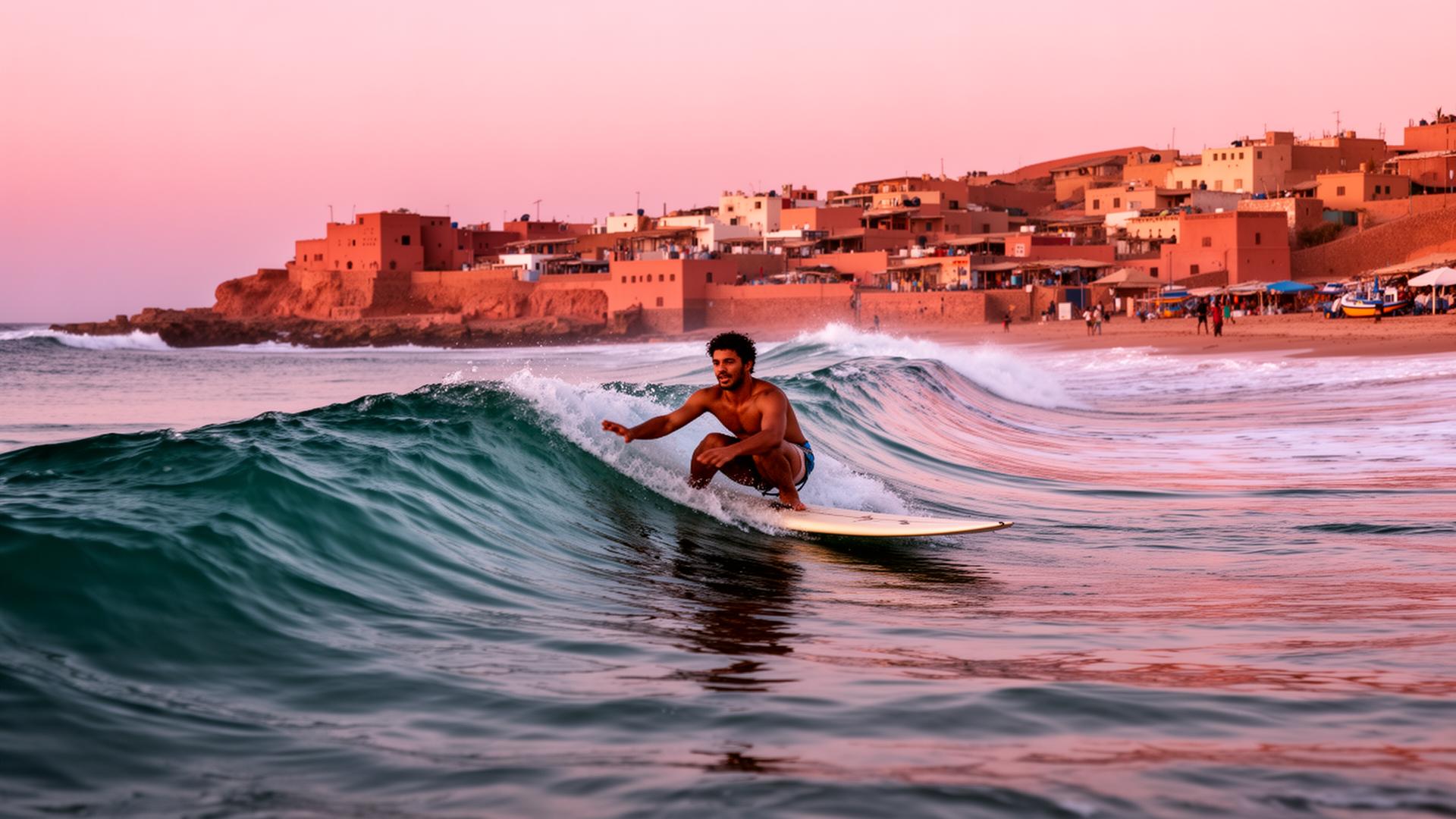
Summer in Morocco (June–August) means extreme heat inland, but the Atlantic coast, the Rif Mountains and Chefchaouen offer genuine alternatives. Know where the heat is manageable, where to go instead and how to travel smart in the hottest months.
In this guide
How hot is Morocco in summer?
Inland Morocco in summer is genuinely hot. Marrakech regularly records 38–44°C in July and August; Fes can hit 40°C; the Sahara at Merzouga reaches 45–50°C. These are not exaggerated travel-warning figures — they are real daily maxima that limit the time you can spend outdoors between roughly 11:00 and 17:00. The heat is dry, which makes it slightly more bearable than humid equivalents, and shaded riads with thick walls stay significantly cooler than the streets.
The Atlantic coast is a completely different story. Essaouira — 180 km west of Marrakech — averages 22–25°C in July due to the north-east Alizé trade wind that blows persistently all summer. Agadir is similarly moderated: 24–28°C, sunny, breezy and excellent for beach holidays. Taghazout's surf is flat in summer (the swell season ends in April), but the beach and the wind are pleasant. Chefchaouen in the Rif sits at 600 m altitude and benefits from cooler mountain air: 25–30°C in July, with cool evenings.
- Marrakech: July–August average maximum 38–42°C — save sightseeing for mornings and evenings.
- Fes: similar to Marrakech; the dense medina traps heat — avoid midday walking.
- Sahara (Merzouga): 45–50°C in July–August; most luxury camps reduce services or close.
- Essaouira: 22–25°C year-round due to the Alizé wind — Morocco's best summer city.
- Agadir: 24–28°C; ideal for beach holidays; surf flat but water sports continue.
- Chefchaouen: 25–30°C; mountain-cooled; excellent for summer hikers.
Where should you go in Morocco in summer?
The Atlantic coast from Agadir to Essaouira is the right answer for most summer visitors. These cities are genuinely comfortable, beautiful and very different from each other — Agadir for the safe swimming beach, family resort infrastructure and easy day trips; Essaouira for the ramparts, the seafood, the windsurfing and the medina atmosphere. The coast road between them (via the argan forest) is one of Morocco's most scenic drives.
In the north, Chefchaouen and the Rif Mountains offer a cooler, mountain-flavoured alternative to the baking south. The blue medina is at its most animated in summer with Moroccan domestic tourists; the Cascades d'Akchour gorge walk is lush and beautiful. Tangier in summer is mild and surprisingly underrated — the café culture, the kasbah and the Strait views are all excellent.
How to manage the heat in Marrakech in summer
If your travel dates are fixed and Marrakech is non-negotiable in summer, structure your days around the heat. Rise at 7:00 and visit the major sights before 10:30 — Jardin Majorelle, the Bahia Palace, the Medersa Ben Youssef and a souk wander are all feasible in three early hours. Return to the riad for the afternoon (the pool, the shade, the hammam); emerge again after 17:00 when the city begins to breathe. Jemaa el-Fnaa in the evening is still spectacular.
Staying in a riad with a pool is not a luxury in July–August — it is practical and greatly improves the experience. Moroccan riad construction (thick earth-brick walls, small windows, interior courtyard) keeps interiors significantly cooler than the street: 28°C indoors while 42°C outside is not unusual. Many restaurants and riads are air-conditioned; seek these out for afternoon meals and drinks.
- Sightseeing window: 7:00–10:30 and 17:00–sunset; avoid outdoors 11:00–17:00.
- Stay in a riad with a pool — a genuine necessity rather than an upgrade in July–August.
- Wear breathable, loose clothing in light colours; cover the shoulders for mosques and markets.
- Drink bottled water constantly; carry a water bottle and refill it at restaurants.
- The hammam is cooler than you might expect — a midday hammam session is a civilised way to pass the hottest hours.
Is the Sahara worth visiting in summer?
Honestly, no — not for the classic luxury camp experience. July and August heat at Merzouga reaches 45–50°C, camel rides become miserable endurance tests, and many higher-end camps either close entirely or reduce operations significantly. If the Sahara is the centrepiece of your Morocco trip, plan for October to April. If your dates are in summer and you still want a taste of southern Morocco, Ouarzazate and the Drâa Valley (at 1,000–1,200 m altitude) are cooler than the dune fields and remain accessible, though still hot in absolute terms.
Frequently asked
Is Morocco good in summer?
The Atlantic coast (Essaouira, Agadir, Taghazout) and the northern mountains (Chefchaouen, Tangier) are excellent in summer. Marrakech, Fes and the Sahara are very hot — manageable with the right riad and timetable, but not ideal for first-time visitors. Match your destination to the season rather than forcing summer into an inland itinerary.
What is the coolest city in Morocco in summer?
Essaouira is Morocco's coolest summer city: the Alizé trade wind holds temperatures at 22–25°C in July–August, even while Marrakech (180 km east) is at 40°C. Chefchaouen at 600 m altitude is the coolest inland option. Tangier and the north coast are also comfortably mild.
Is it safe to hike in Morocco in summer?
In the Atlas (Toubkal), summer is technically the hiking season — the snow has cleared and the paths are open. However, heat at lower altitudes is intense; start hikes at dawn and return to hut altitude by midday. On the coast and in the mountains below 1,500 m, hiking in July–August requires very early starts and ample water.
How do Moroccan riads stay cool in summer?
Traditional Moroccan riad construction uses thick earth-brick or stone walls, a shaded interior courtyard, small exterior windows and a fountain — a passive cooling system that predates air conditioning by a millennium. Inside a good medina riad on a 42°C day, interior temperatures of 26–28°C are typical. Add a pool and it becomes very comfortable. Many riads also have air conditioning in the bedrooms.
What are the school holiday crowds like in Morocco in summer?
July and August see a significant influx of Moroccan domestic tourists (school holidays) and European visitors, particularly on the Atlantic coast and in Marrakech. Essaouira in August is busy. Book accommodation at least 2–3 months ahead for the coast in peak summer; Marrakech's medina riads are easier to secure as some international visitors avoid the heat.
Planning a trip?
Let a Marrakech atelier handle the details.
Tell us your dates and style and we'll send a written itinerary and a transparent quote within 24 hours.
Request an itineraryKeep reading
Planning
The Best Time to Visit Morocco
Spring (March–May) and autumn (September–November) are the best all-round times to visit Morocco — warm days, cool evenings and ideal conditions for the medinas, mountains, coast and desert alike.
Planning
Things to Do in Essaouira: The Essential Guide
Essaouira is Morocco's Atlantic counterpoint to Marrakech — a fortified white-and-blue port city with ramparts, a working fishing harbour, outstanding grilled seafood, world-class windsurfing and a medina that is genuinely liveable and calm. Three hours from Marrakech and entirely different in character.
Planning
Surfing in Morocco: Taghazout, Agadir & Imsouane
Morocco's Atlantic coast offers consistent surf from September to April, warm winters, cheap living and a relaxed surfing culture centred on Taghazout, with long right-hand points at Imsouane and town beach options in Agadir.