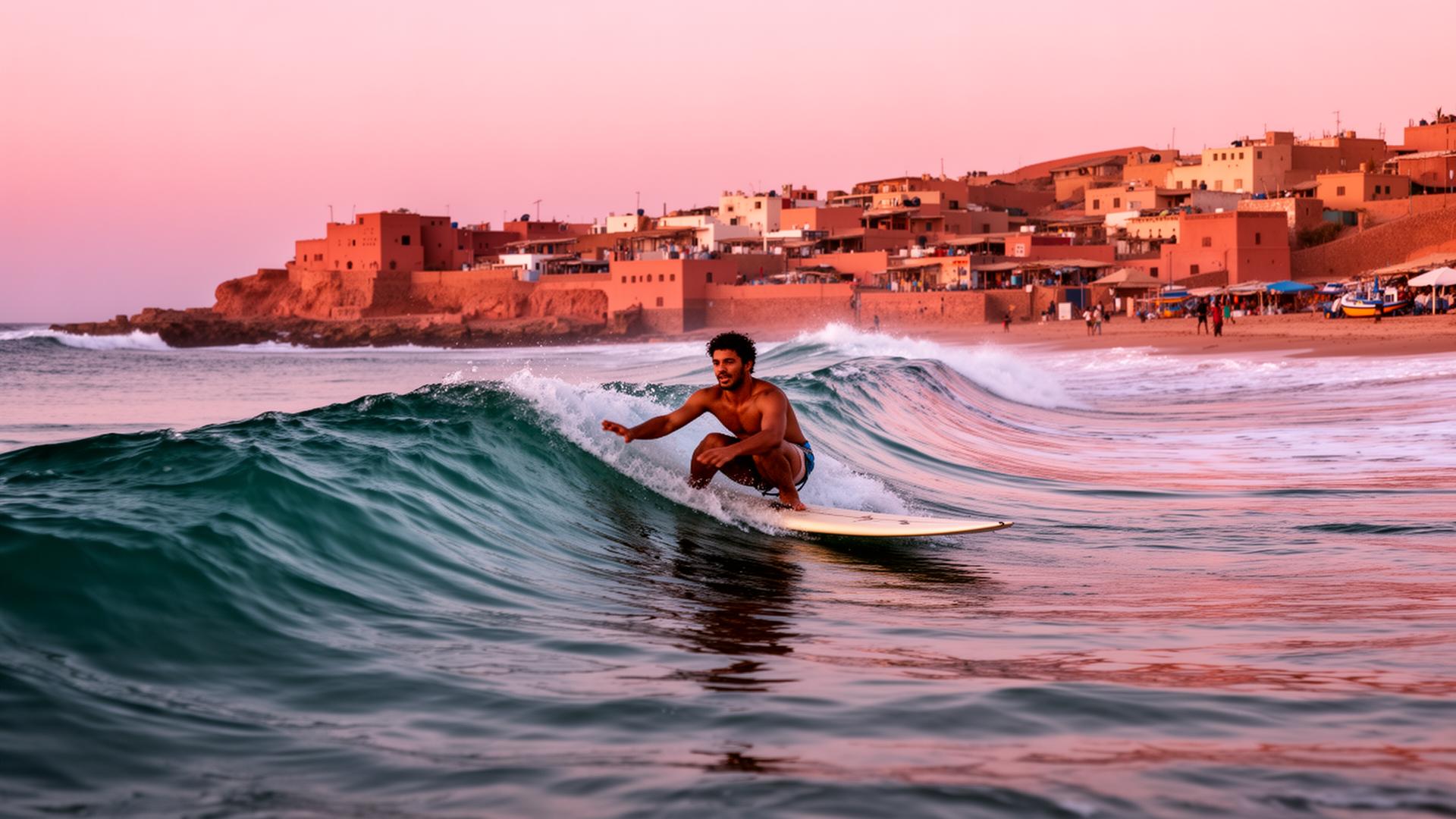
Morocco's Atlantic coast offers consistent surf from September to April, warm winters, cheap living and a relaxed surfing culture centred on Taghazout, with long right-hand points at Imsouane and town beach options in Agadir.
In this guide
What are the best surf spots in Morocco?
The stretch of Atlantic coastline between Agadir and Taghazout is Morocco's surf heartland. Taghazout itself — a compact, whitewashed village 20 km north of Agadir — has six named breaks within easy reach. Anchor Point is the flagship: a long, powerful right-hander that runs for up to 300 metres on a good swell, with a fast section at the top and a more workable wall further down. Hash Point (also called Crocro) is directly in front of the village — accessible and good for intermediates when Anchor is closing out.
Imsouane, 70 km north of Taghazout, has one of Africa's longest right-hand point breaks: a mellow, cross-shore wave that can peel for 500–800 metres. It is exceptionally good for longboarders and beginners progressing beyond beach-break foam. The bay is sheltered enough that it holds waves in cross-shore winds that close out everywhere else. Agadir's town beach (Plage d'Agadir) is a long, wide strand with gentle beach-break waves, good for absolute beginners.
- Anchor Point: powerful right-hand point; intermediate to advanced; best at 6–8 ft swell.
- Hash Point / Crocro: right-hander in front of Taghazout village; forgiving and popular with learners.
- Killer Point: hollow and fast at low to mid tide; best for experienced surfers in 4–6 ft swell.
- Boilers: reef break at low tide; consistent and punchy; suits experienced shortboarders.
- Imsouane: Africa's longest right-hander; best for longboards and progression surfers; very consistent.
- Plage d'Agadir: wide beach break; gentle waves; ideal for beginners and surf lessons.
What is the best season to surf in Morocco?
September to April is the prime surf window. Atlantic low-pressure systems push consistent northwest swells from the open ocean — typical swell heights at Taghazout in winter are 3–8 ft, with larger swells arriving in November, January and February. Water temperature stays between 17–21°C in winter (a 3mm wetsuit is comfortable; 4/3mm preferable in December and January). Air temperatures in Taghazout in January average 17–20°C — warm enough for a vest and shorts out of the water.
Summer (June–August) is the flat season. The north-east trade winds (the Alizée) pick up and the Atlantic swells diminish significantly. Some beach-break days occur, but dedicated surf travellers do not book Taghazout in July. Agadir and Sidi Ifni occasionally produce workable summer surf from south swells, but these are inconsistent.
What are Taghazout surf camps like?
Taghazout has evolved from a backpacker village to a legitimate surf destination with a wide spectrum of accommodation. Dedicated surf camps — of which there are perhaps 30 operating in and around the village — typically include a room (shared or private), breakfast, surf coaching, board hire and a daily transfer to the right break by van. Quality ranges from very basic (shared dormitories, beginner-only coaching) to boutique (private en-suite rooms, video analysis, separate intermediate and advanced groups, yoga).
Prices for a week-long all-in surf camp run from approximately US$450 (budget, shared room) to US$1,200–1,800 (boutique, private room, coaching-heavy). The better camps limit group sizes to 6–8 surfers per coach, which makes a noticeable difference to progression. Book well ahead for November to February, when demand from European surfers peaks.
Is Morocco good for beginner surfers?
Yes — Morocco is one of Europe's most popular beginner-to-intermediate surf destinations for several reasons: warm winter air, affordable lessons and camps, and a genuine variety of wave types from gentle beach break (Agadir, Tamraght) to more powerful points (Anchor, Killer) that allow progression in a single trip. Most camp coaches are Moroccan and proficient in English, French and Spanish.
Beginners should start on Agadir beach or Tamraght's beach break before progressing to Hash Point. Anchor Point and Killer Point are not beginner waves — the rocky entry, the power and the crowd (Anchor in particular can be busy on good days) make them appropriate for surfers who can confidently handle 4+ ft surf and know how to manage a lineup.
Frequently asked
Is Taghazout good for beginner surfers?
Hash Point in front of the village is suitable for confident beginners and intermediates. For absolute beginners, starting on the beach break at Tamraght (5 km south) or Agadir beach before moving to Hash Point is the recommended progression. Anchor Point and Killer Point are intermediate-to-advanced waves.
When is the best time to surf in Taghazout?
October to March is the sweet spot — consistent Atlantic swells, warm air and water cool enough for a 3mm wetsuit. November, January and February deliver the most reliable powerful surf. April is a good shoulder month with smaller, cleaner waves. Avoid June to August when the coast goes flat.
Do I need to bring my own surfboard to Morocco?
No — all surf camps and most surf shops in Taghazout rent boards by the day or week. Quality has improved markedly: you'll find decent modern shortboards, longboards and mini-mals. If you're particular about equipment or ride a specific board shape, bringing your own is worthwhile; airlines typically charge US$50–100 for a board bag.
What is the water temperature in Taghazout in winter?
Approximately 17–20°C from October to March — cool enough to need a wetsuit for extended sessions. A 3mm shorty or full suit is comfortable in October and March; a 3/2mm or 4/3mm full suit is advisable in December and January. The Canary Current keeps the water milder than equivalent Atlantic latitudes in Europe.
How long is the wave at Imsouane?
Imsouane's right-hand point can peel for 500–800 metres on a good day — one of the longest rideable waves in Africa. It is a mellow, cross-shore wave ideal for longboarding and progression surfers. On a swell of 4–5 ft, a single wave can give 45–90 seconds of ride time.
Planning a trip?
Let a Marrakech atelier handle the details.
Tell us your dates and style and we'll send a written itinerary and a transparent quote within 24 hours.
Request an itineraryKeep reading
Planning
The Best Time to Visit Morocco
Spring (March–May) and autumn (September–November) are the best all-round times to visit Morocco — warm days, cool evenings and ideal conditions for the medinas, mountains, coast and desert alike.
Practical
What to Pack for Morocco
Pack light, modest and layered. Morocco swings from hot medinas to cold desert and Atlas nights in a single trip, so breathable layers, comfortable walking shoes and a warm top cover almost everything.
Itineraries
Morocco Itinerary: 14 Days — The Grand Two-Week Route
Two weeks is enough to cover Morocco's full sweep: the imperial cities of the north, the High Atlas, the kasbah road, a night in the Sahara and the wild Atlantic coast — all at a genuinely unhurried pace.