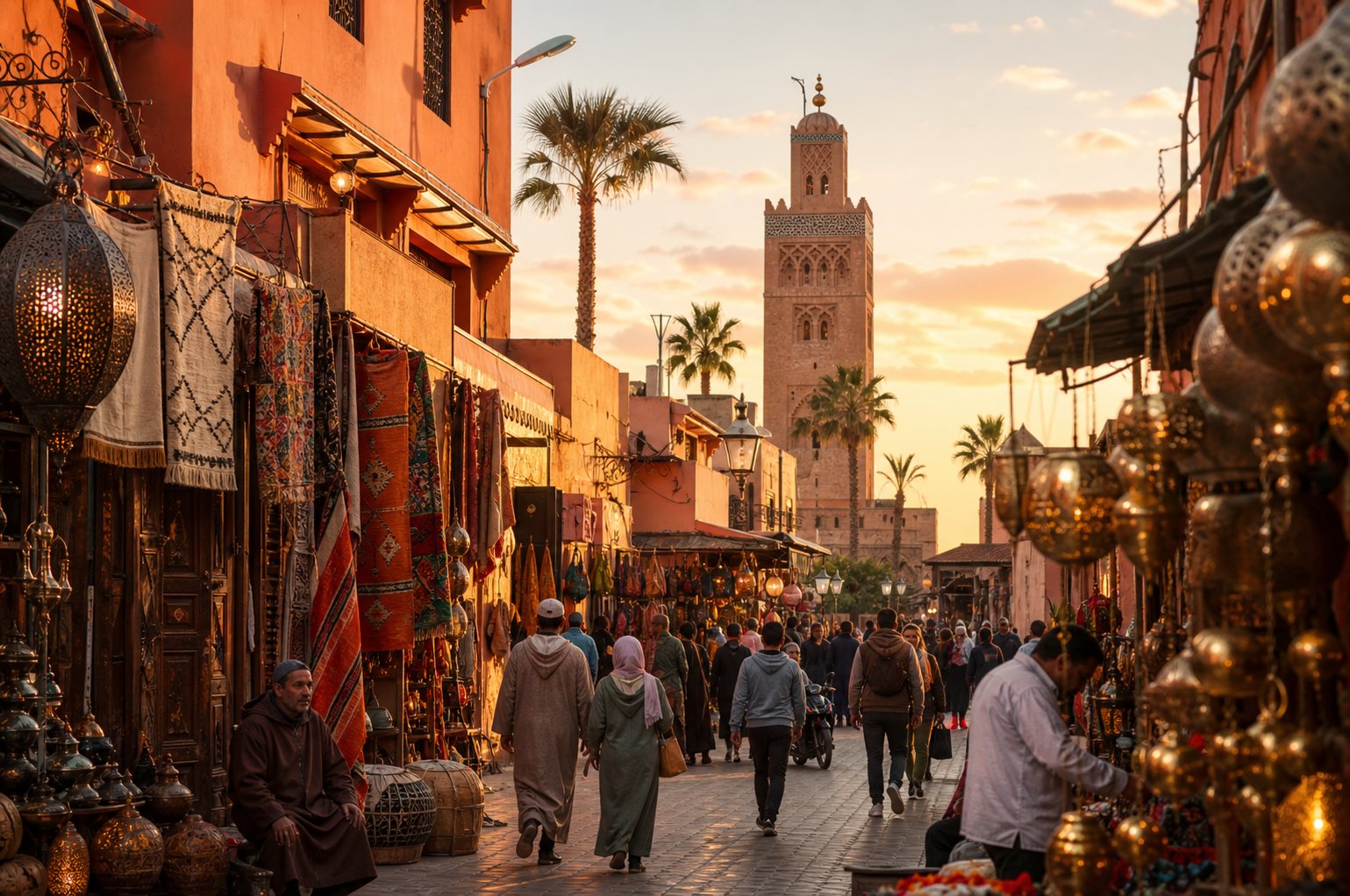
In Morocco's souks, bargaining over crafts is expected — and, done lightly, it's good fun. Here's how it actually works: where to haggle and where not to, how to open, what's negotiable, and how to keep the whole thing friendly rather than a fight.
In this guide
When to haggle — and when not to
Bargaining is part of the culture in the souks, where craft prices are rarely fixed and the back-and-forth is half the experience. Rugs, leather, lamps, ceramics and other handmade goods are all sold this way: there is no set price tag, so the figure you pay is the one you and the seller agree on.
Equally important is knowing where not to haggle. Fixed-price shops, supermarkets and the state-run Ensemble Artisanal (a fixed-price craft showroom found in most cities) sell at the marked price — pushing to negotiate there is out of place. Food and groceries are fixed too. Treat the Ensemble Artisanal as a useful reality check: browse it first to learn roughly what good-quality crafts cost, then head into the souks armed with a sense of fair value.
- Haggle: rugs, leather, lamps, ceramics, metalwork and other crafts in the souks.
- Don't haggle: fixed-price shops, supermarkets, the Ensemble Artisanal, food and groceries.
- Taxis: metered fares are fixed — but agree the price first for any unmetered or long-distance ride.
How to do it
Only start bargaining if you genuinely intend to buy — engaging in the dance and then walking away over nothing can feel like wasted time for the seller. When you find something you want, ask the price, then counter somewhere around a third to a half of that first figure. The opening ask is deliberately high; your job is to meet in the middle, and the final price usually lands well below where it started.
Stay friendly and good-humoured throughout. This is a social exchange, not a confrontation — smiles, a little patience and some easy conversation get you a better price than stubbornness ever will. Take your time; there is no rush, and a relaxed pace works in your favour.
Walking away is a normal and accepted tactic, not an insult — if the number isn't right, thank the seller and start to leave. Often you'll be called back with a better offer; sometimes you won't, which simply means that was as low as they would go. Either way, no harm done.
- Only begin if you're genuinely interested in buying.
- Open around a third to a half of the first asking price.
- Stay friendly, patient and good-humoured — it's a game, not a fight.
- Walking away is normal; you'll often be called back.
The mint tea, and other gentle pressures
In carpet and craft shops especially, you may be offered a glass of sweet mint tea — sometimes called 'Berber whisky'. This is genuine hospitality, a mark of welcome, and accepting it does not oblige you to buy anything. Enjoy the tea, take your time over the goods, and feel free to leave politely if nothing is right for you.
You may also hear lines designed to nudge you — 'special price for you', 'first sale of the day for luck', 'just look, no charge'. Take them in good humour; they are part of the performance. Decide your own ceiling before you start, stay relaxed, and don't let a friendly hard-sell push you past the price you're comfortable with.
What's negotiable vs fixed
As a rule, anything handmade and sold without a price tag is negotiable — and the bigger the item, the more room there usually is. Rugs and carpets have the widest margins, followed by leather goods, lamps and lanterns, ceramics and metalwork. Smaller souvenirs have less give but still some.
Fixed prices apply to food and groceries, supermarkets, fixed-price boutiques and the Ensemble Artisanal. Transport sits in between: city petit-taxi fares should be metered (insist on the meter), while grand taxis, unmetered rides and day-hires are negotiated — always agree the fare before you set off, never after.
- Most room: rugs and carpets, then leather, lamps, ceramics, metalwork.
- Fixed: groceries, supermarkets, the Ensemble Artisanal, marked-price shops.
- Taxis: insist on the meter in town; agree the fare first for unmetered or long-distance trips.
Practical tips for a smooth haggle
Carry small notes and coins. Producing a large bill weakens your position and invites 'no change' delays; having close to the agreed amount ready makes the close quick and clean. It also helps to settle on a single currency — pay in dirhams rather than euros or dollars, which usually attract a worse implied rate.
Above all, keep it light and keep it kind. A good haggle ends with both sides happy — you with a fair price and a story, the seller with a sale. It's a social game played thousands of times a day across Morocco, not a battle to be won. Smile, mean your offers, and enjoy it.
- Carry small notes and coins; pay in dirhams.
- Know your ceiling before you start — and stick to it.
- Keep it good-humoured: a fair deal leaves everyone smiling.
Frequently asked
Is haggling expected in Morocco?
Yes, for crafts in the souks — rugs, leather, lamps, ceramics and the like are sold without fixed prices, and bargaining is part of the culture. It is not expected in fixed-price shops, supermarkets, the state-run Ensemble Artisanal, or for food and groceries, where you pay the marked price.
How much should I offer when bargaining in Morocco?
A common approach is to counter the first asking price with an offer of about a third to a half of it, then meet somewhere in the middle. The opening figure is deliberately high, so the final price usually settles well below where it started. Only start if you genuinely want to buy.
If I accept the mint tea, do I have to buy something?
No. The glass of sweet mint tea is hospitality and a sign of welcome, not an obligation. Enjoy it, take your time looking, and you're free to leave politely if nothing is right for you.
Can you bargain with taxi drivers in Morocco?
City petit-taxi fares should be on the meter — insist on it. For grand taxis, unmetered rides and day-hires, the fare is negotiated, so always agree the price before you set off rather than after you arrive.
Is it rude to walk away when haggling?
Not at all — walking away is a normal and accepted part of bargaining. If the price isn't right, thank the seller and start to leave; you'll often be called back with a better offer. Keep it friendly and good-humoured throughout.
Planning a trip?
Let a Marrakech atelier handle the details.
Tell us your dates and style and we'll send a written itinerary and a transparent quote within 24 hours.
Request an itineraryKeep reading
Culture
Shopping in the Souks: What to Buy, Fair Prices & Tips
Morocco's souks are among the world's great shopping experiences — but they reward preparation. Knowing what to look for in rugs, leather, ceramics, lanterns and argan products, what fair prices look like, and how to bargain and ship makes the difference between a satisfying haul and buyer's regret.
Culture
Morocco Etiquette & Customs
A little cultural awareness goes a long way in Morocco. Dress modestly, greet warmly, ask before photographing people, use your right hand, and embrace the unhurried pace of mint tea and conversation.
Practical
Avoiding Scams & Hassles in Morocco: An Honest Guide
Morocco is a genuinely safe and welcoming country, and the overwhelming majority of people you meet are warm and honest. But like any major tourist destination, the busy medinas have a handful of well-worn hustles aimed at visitors. None of them are dangerous — they are nuisances, not threats — and a little familiarity plus a polite, confident 'no' is all it takes to sidestep them and enjoy the country relaxed.
Culture
A Guide to Moroccan Architecture & Decorative Arts
Moroccan architecture is a language of courtyards, fortresses and dazzling surface decoration. From the inward-looking riad and the earthen kasbah to zellij tilework, tadelakt plaster and carved cedar, this guide explains the building types and decorative arts you'll see across the medinas, palaces and southern oases.