Morocco's souks are among the world's great shopping experiences — but they reward preparation. Knowing what to look for in rugs, leather, ceramics, lanterns and argan products, what fair prices look like, and how to bargain and ship makes the difference between a satisfying haul and buyer's regret.
In this guide
What should you buy in Moroccan souks?
The souk's output spans a vast range of quality and authenticity — the same street can sell a machine-made Chinese rug and a hand-knotted Berber masterpiece within 10 metres of each other. The most rewarding things to buy are those made in Morocco, by Moroccan hands, using techniques that have not changed in generations. Five categories stand out.
- Rugs and kilims: the single highest-value purchase — handwoven Berber rugs from the Atlas (Beni Ourain, Boucherouite, Azilal) are genuinely beautiful and durable. Look for tight, even knotting on the reverse and natural wool that has a slight springiness, not a plastic sheen.
- Leather goods: Fes is the world capital of traditional vegetable-tanned leather. Babouches (slippers), bags, belts and poufs are the classics. Quality leather feels supple and smells natural — the Chouara tannery's product is distinctive. Marrakech leather is widely available but often thinner and less durable.
- Ceramics: Fes produces the finest mosaic tilework and blue-on-white pottery (blue and white is Fassi; terracotta is Safi; coloured geometric patterns are Meknes-style). Look for even glazing and a clean rim — rough edges indicate mass production. Safi, the pottery capital south of Casablanca, is worth visiting for extraordinary workshop prices.
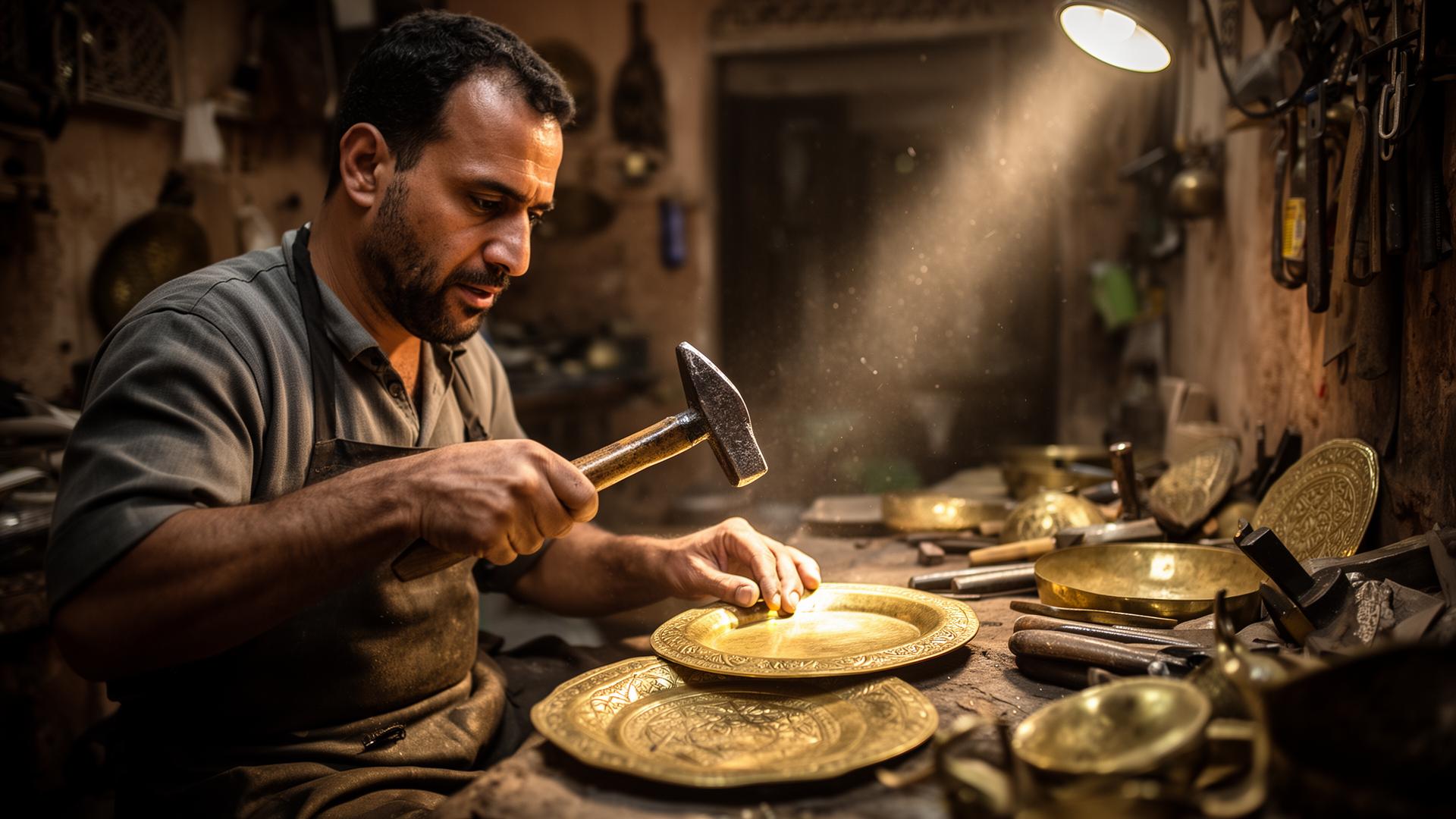
- Lanterns and metalwork: hand-pierced brass and copper lanterns from Marrakech are iconic and practical. Quality shows in the evenness of the piercing pattern and the weight of the metal. Tin substitutes are lighter and rust; brass is heavier and lasting.
- Argan oil and cosmetics: genuine cold-pressed argan oil from certified women's co-operatives (look for the Solidarité Féminine or similar co-op label) is the real thing — the Sous Valley outside Agadir is the source. Culinary argan oil (toasted, nutty) is a unique ingredient; cosmetic argan oil is world-class. Many souk products are diluted or adulterated; buy from co-ops, pharmacies or specialist shops with provenance.
What are fair prices in the Moroccan souks?
Opening prices in tourist souks are typically 200–400% of the price a Moroccan would pay, sometimes more. This is not straightforwardly exploitative — bargaining is the expected mechanism and both parties understand the game — but it does mean that paying the first price asked is always leaving money on the table. A rough rule: open your counter-offer at 30–40% of the asking price and settle somewhere around 50–60% for most goods.
Specific benchmarks (prices in MAD, correct to mid-2026): a pair of standard babouche slippers, 50–120 MAD fair price (you will be quoted 300–500); a small ceramic bowl, 40–80 MAD (quoted 200–400); a medium hand-knotted rug, 1,500–5,000 MAD depending on size, weave and age (opening prices of 8,000–15,000 MAD are common). For argan oil, a 100 ml bottle of quality cosmetic oil from a co-op is approximately 80–120 MAD; souk prices for the same volume can run 200–500 MAD for inferior product.
How do you bargain effectively in a Moroccan souk?
Bargaining in the Moroccan souks is a social ritual, not an adversarial conflict. The shop owner expects you to negotiate; arriving with that understanding makes the process enjoyable rather than stressful. A few principles that apply across the board: decide what the item is worth to you before you enter the shop; do not reveal enthusiasm until you are ready to make an offer; open well below your limit; drink the tea if offered, but remember tea is not an obligation to buy; and be prepared to walk away — slowly and genuinely.
Walking away is the most powerful tool in the buyer's kit. A significant proportion of Moroccan souk sales are closed when the buyer leaves and the merchant calls them back with the real price. If you walk out of a shop and continue down the alley, you are in a stronger negotiating position than at any point during the conversation. Return 20 minutes later if you genuinely want the item — the price will often have moved.
Can you ship souk purchases home from Morocco?
Yes, and for larger items (rugs, large ceramics, a full set of lanterns) it is often more practical than attempting to take them as airline luggage. Most rug and ceramics shops with any experience of international buyers offer a shipping service — the rug is rolled and bagged or crated, and sent by DHL, UPS or Moroccan post. Expect to pay US$80–200 for a medium rug to Europe or the US, plus the shop's packing fee (typically 50–150 MAD).
Verify provenance claims carefully if you are spending significant sums. Antique rugs and items described as 'Berber grandmother's rug' require documentation for customs in many countries; if you are genuinely buying a piece with age and value, insist on a signed receipt with a description and a CITES certificate if relevant (primarily for ivory or tortoiseshell items, which you should not buy in any case). For standard modern crafts, shipping is straightforward.
- For rugs: ask the shop to write a receipt describing the weave, approximate age and origin — useful for customs and insurance.
- For ceramics: bubble wrap is available everywhere in the souks; shipping through a specialist is safer than airline luggage.
- For argan oil: quantities above 100 ml in carry-on will be confiscated at airport security — pack in hold luggage or ship.
- For leather: carries no import restrictions but treat it with leather conditioner on arrival if it has dried during transit.
Frequently asked
What is the best thing to buy in Moroccan souks?
Hand-knotted Berber rugs, quality leather goods from Fes, genuine argan oil from a co-operative, hand-pierced lanterns and Fassi ceramics are the classic choices. All are genuinely made in Morocco and are difficult or impossible to replicate at home. Avoid generic tourist trinkets that are manufactured outside Morocco.
How do you know if a Moroccan rug is authentic?
Examine the reverse — hand-knotted rugs have visible individual knots (irregular, tight); machine-made rugs have a smooth, fabric-like backing. Natural wool has a slight springiness and warmth; synthetic fibres are cooler and slightly plasticky. A good shop will let you examine the reverse and will not be offended by the question.
Is it rude not to bargain in Morocco?
Not rude, but unusual — and costly. Accepting the first price in a tourist souk pays the maximum possible. Fixed-price shops (they will advertise 'prix fixe') are the exception: here, the marked price is the price, and bargaining is not expected. In fixed-price artisan co-operatives, the quality is often more reliably verified too.
Where is the best souk in Morocco for shopping?
Marrakech's medina souks (particularly the Rahba Lakdima spice market and the souk des tapis for rugs) are the most famous and accessible. Fes is the better destination for leather and fine ceramics — the tannery-adjacent leather shops and the potters' quarter around Ain Nokbi offer product you cannot find elsewhere. For argan oil, a women's co-operative in the Sous Valley near Agadir is the definitive source.
Can you buy argan oil in Morocco souks?
Yes, but with caution. The quality in tourist souks varies enormously — many products are diluted with other oils or are not cold-pressed. The safest sources are certified women's co-operatives (many are roadside between Agadir and Essaouira), pharmacies and specialist organic shops. Genuine cold-pressed cosmetic argan oil is golden, with a mild nutty scent; culinary argan oil is darker and toasted.
Planning a trip?
Let a Marrakech atelier handle the details.
Tell us your dates and style and we'll send a written itinerary and a transparent quote within 24 hours.
Request an itineraryKeep reading
Culture
Morocco Etiquette & Customs
A little cultural awareness goes a long way in Morocco. Dress modestly, greet warmly, ask before photographing people, use your right hand, and embrace the unhurried pace of mint tea and conversation.
Culture
Moroccan Food & Drink
Moroccan cuisine is one of the world's great food cultures: slow-cooked tagines, couscous Fridays, fresh-grilled seafood on the coast, and the endless ritual of sweet mint tea.
Planning
Morocco Travel Costs & Budget
Morocco can be done on almost any budget. Mid-range travellers spend roughly US$80–150 per person per day; private, riad-based trips with a driver-guide typically run US$200–400+ per day depending on season and style.