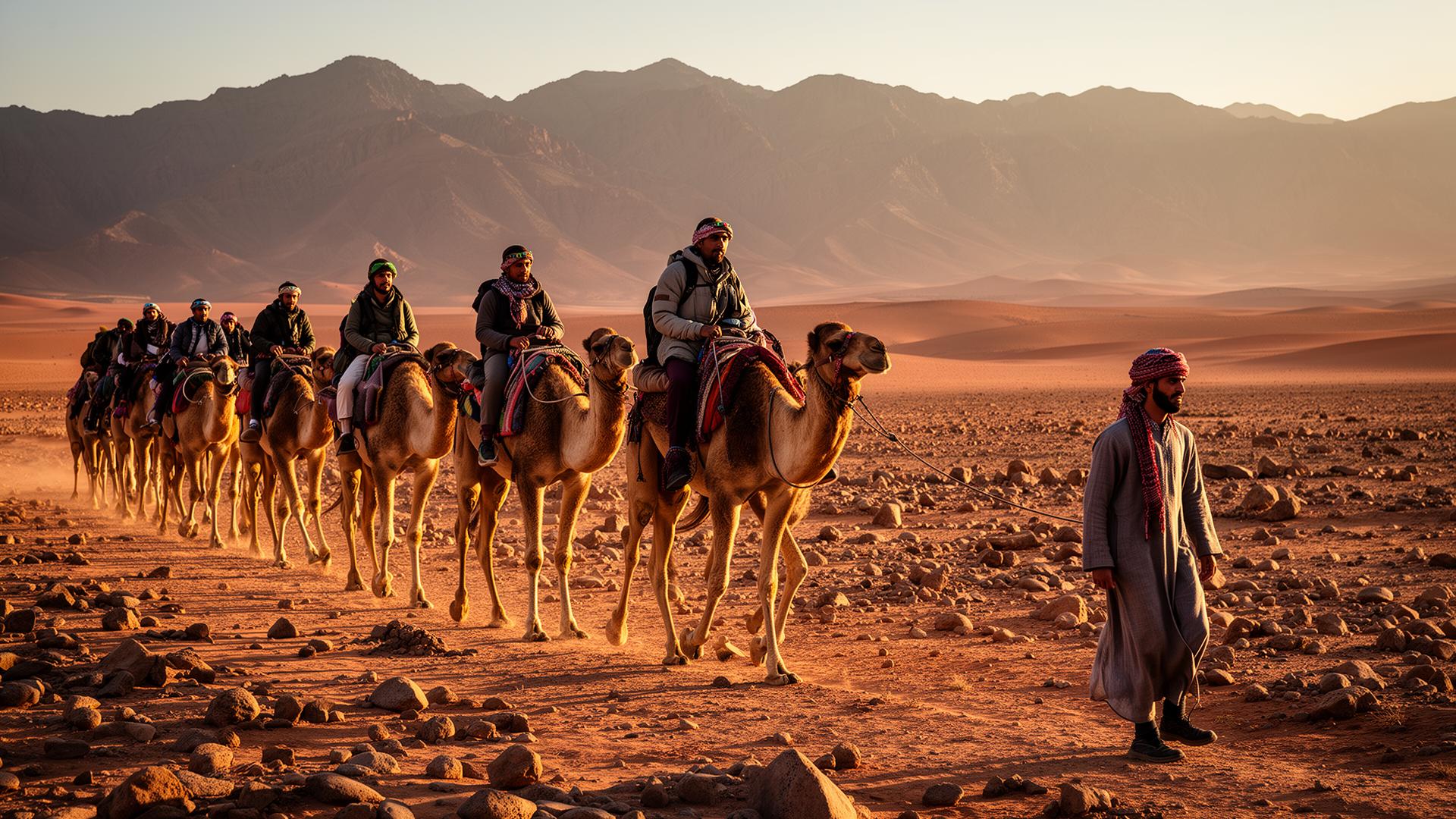
A camel trek in the Moroccan Sahara is one of the most iconic travel experiences in North Africa. This guide covers the best locations, what to expect physically, how long to book and what a night in a desert camp really feels like.
In this guide
Where can you go camel trekking in Morocco?
Morocco has two main camel trekking destinations: Erg Chebbi (near Merzouga) in the east and Erg Chigaga (near M'Hamid el-Ghizlane) in the west. Erg Chebbi is the more accessible — a fully paved road reaches Merzouga village, and the dunes rise almost from the edge of the settlement. It is also the busier of the two, with dozens of camps and a visible infrastructure of camels, guides and quad bikes operating daily. Erg Chigaga is more remote, reached by a 50 km piste (sandy track) from M'Hamid that requires a 4WD or organised transfer. The reward is a far quieter experience and dunes that feel genuinely desolate.
Smaller dune areas exist near Zagora (Erg Lehoudi) and Foum Zguid, which are useful for travellers on a tighter itinerary who cannot reach Merzouga. However, these dunes are modest in scale compared to Erg Chebbi (which rises to 150 m) and Erg Chigaga.
- Erg Chebbi (Merzouga): most accessible, dramatic 150 m dunes, many camp choices.
- Erg Chigaga (M'Hamid): most remote and wild, 4WD piste required, quieter.
- Zagora / Erg Lehoudi: closer to Marrakech, smaller dunes, good for a one-night extension.
- Foum Zguid: off the beaten path, small dunes, minimal infrastructure.
What is a camel trek physically like?
Moroccan dromedaries (single-humped camels) are trained for trekking and are generally calm and predictable. You sit in a padded saddle on the camel's back; the mounting and dismounting process — the camel kneels down and then stands in two lurching stages — is the moment most novice riders find alarming. The gait itself is a comfortable rolling motion at walking pace.
A typical dune-approach trek lasts 45 to 90 minutes each way — enough time to reach a dune camp from the edge of Merzouga village. Longer overnight treks of two to four days exist and cover ground away from the main tourist areas. For extended treks, bring padded cycling shorts or similar to prevent inner-thigh discomfort on the second and third days.
What happens on a desert camp night?
The standard experience: camel trek into the dunes in the late afternoon, arriving at camp before sunset. A guide climbs the nearest dune with you to watch the sun drop. Dinner (tagine, couscous, Moroccan salads and fresh bread from a camp oven) is served in the communal tent or outdoors by lantern. Gnaoua musicians play frame drums and guembri bass lute. You sleep in your private tent on a proper bed with blankets — the desert night sky is the spectacle.
At sunrise you are woken for a dune climb before the wind rises and the heat builds; the golden light on the orange sand at 06:30–07:00 is the moment photographers wait for. Breakfast back at camp, then the camel trek returns to the edge of the dunes where your driver or vehicle waits.
- Camp tiers: basic (shared tent, foam mattress) to luxury (private ensuite tent, real bed, hot shower).
- Dinner: tagine is universal; some luxury camps offer a three-course Moroccan-French menu.
- Music: Gnaoua drumming is offered at most camps; optional but atmospheric.
- Star gazing: the Sahara has minimal light pollution — bring a star map or download a sky app.
When is the best time for camel trekking in Morocco?
October to April is the prime camel trekking season. Day temperatures are comfortable (20–30°C) and desert nights are cool to cold (0–10°C in January); bring a sleeping bag liner or use the camp blankets provided. From May through September, daytime temperatures in the Sahara exceed 40°C and frequently reach 48°C in July and August. Camel treks still operate in summer, but they are done at dawn (05:30–07:00) to avoid the worst heat. Most travellers find a summer Sahara visit a test of endurance rather than enjoyment.
Ramadan does not significantly affect the camel trekking experience — camp guides continue to operate, and iftar (breaking of the fast at sunset) is a meal you may share with your guide, which is a cultural highlight in itself.
How do you book a camel trek in Morocco?
Most camel treks are booked as part of a packaged desert tour from Marrakech or Fes. Your driver-guide arranges the camp and camel handler as part of the circuit. If you are travelling independently and driving yourself, camp operators in Merzouga village (along the main road approaching the dunes) offer walk-in packages, though the best camps are reserved in advance.
Pricing at Merzouga: a one-night camel trek with basic camp (shared tents, cold shower) costs USD 40–60 per person. Mid-range ensuite camps with hot water and better food run USD 80–120 per person. Luxury camps with private tents, real beds and superior dining run USD 150–300 per person per night. Prices include the sunset camel ride, dinner, breakfast and the sunrise return ride.
Frequently asked
Is camel trekking in Morocco safe?
Yes — the dromedaries used for Sahara trekking are experienced work animals accustomed to carrying tourists. Falls are rare. Children from around age four can usually ride with an adult in the saddle or in a separate seat. If you have a severe physical disability or joint injury, discuss this with the camp operator before booking; some conditions are not compatible with the mounting process.
How long is the camel trek to the dunes at Merzouga?
Typically 45 to 90 minutes from the edge of Merzouga village to the main camp area in the dunes. The distance varies depending on which camp you are using — some are closer to the dune base, others are set deeper into the erg. The pace is walking speed throughout.
What should I bring on a camel trek?
A shemagh or scarf to protect against blowing sand; sunscreen (factor 50 minimum); a head torch for the camp at night; warm layers for after sunset (even in spring and autumn the desert cools sharply); a fully charged phone or camera; and cash for tips. Leave everything else in the car or at the guesthouse.
Can I do a multi-day camel trek in Morocco?
Yes. Two- to four-day treks are offered at both Erg Chebbi and Erg Chigaga, covering ground away from the camps and into quieter areas of the dune field. Erg Chigaga multi-day treks are the more adventurous option. Your riad in Marrakech or a specialist desert operator can arrange this; it needs to be planned in advance.
Is there an age limit for camel trekking in Morocco?
No formal age limit. Children from around three to four years old can usually ride, either with a parent or in a small saddle. Elderly travellers with hip or knee conditions should consider the mounting process (the camel kneels and rises sharply) before booking. Most adults of average fitness manage the standard 45–90-minute trek without difficulty.
Planning a trip?
Let a Marrakech atelier handle the details.
Tell us your dates and style and we'll send a written itinerary and a transparent quote within 24 hours.
Request an itineraryKeep reading
Planning
Sahara Desert Tour Guide: Merzouga, Chigaga & Zagora
Three Saharan gateways compete for Morocco's desert travellers: Erg Chebbi at Merzouga for accessibility and grandeur, Erg Chigaga near M'Hamid for remoteness, and Zagora for a shorter excursion. Here is how to choose, what the camps are like, and when to go.
Itineraries
Morocco Desert Tour from Marrakech: The Complete Route Guide
The desert tour from Marrakech — over the Tizi n'Tichka pass, through the kasbahs and gorges, and out to the Sahara at Merzouga — is one of the world's great overland journeys. This guide covers every stage, from day-trip to five-day circuit, with real timings and practical advice.
Planning
Best Time to Visit the Sahara in Morocco
October to April is the Moroccan Sahara's golden window — comfortable days, cold clear nights and dunes lit by low golden light. July and August are brutal and best avoided.