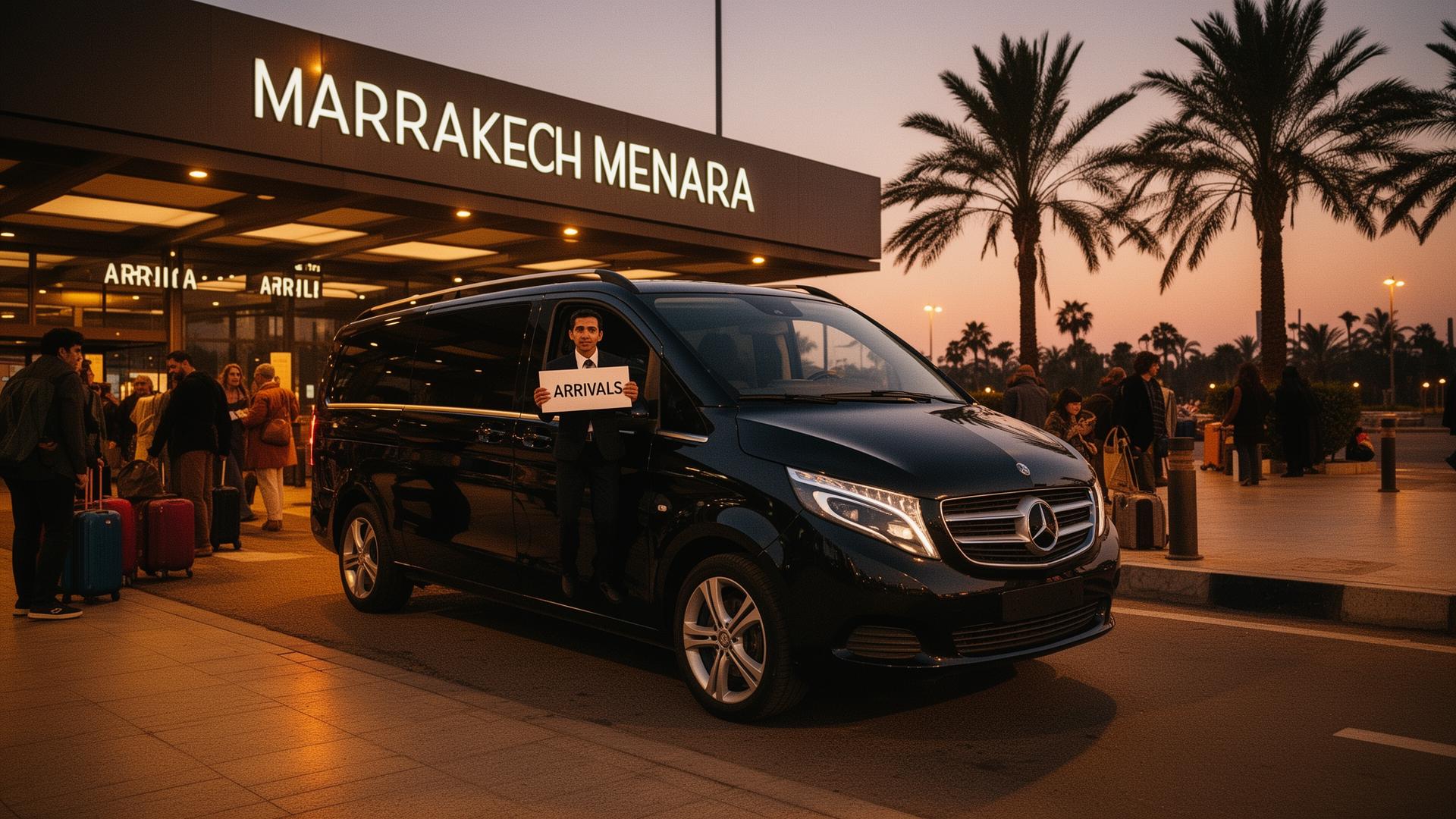
Morocco has several international airports, and choosing the right arrival point can shorten your transfers by hours. Casablanca Mohammed V (CMN) is the largest hub with the widest long-haul and connecting network and its own train into the city; Marrakech Menara (RAK) is the busiest for tourists and the most convenient for Marrakech, the Atlas and the Sahara; Fes-Saïss (FEZ), Agadir Al Massira (AGA), Tangier Ibn Battouta (TNG) and Rabat-Salé (RBA) each suit a particular region. This guide maps which airport fits which itinerary, how to get from each into town, and the practical arrival basics — cash, SIM cards and avoiding taxi overcharging.
In this guide
- 01The big picture: hub vs tourist gateway
- 02Casablanca Mohammed V (CMN): the national hub
- 03Marrakech Menara (RAK): the tourist gateway
- 04The regional airports: Fes, Agadir, Tangier and Rabat
- 05Getting from the airport into town
- 06Domestic flights between airports
- 07Practical arrival tips
- 08Frequently asked
The big picture: hub vs tourist gateway
Two airports dominate any Morocco trip. Casablanca Mohammed V (CMN) is the national hub — it has the broadest choice of long-haul and intercontinental flights, the most onward connections (including with Royal Air Maroc, the flag carrier), and a rail link that feeds straight into the country's train network. Marrakech Menara (RAK) is the busiest airport for tourists, with a dense schedule of direct flights from across Europe, and it sits minutes from the city that anchors most first trips.
The simple rule: fly into CMN if you want the widest flight choice, are connecting onward by air or rail, or are starting in Casablanca, Rabat or the north. Fly into RAK if Marrakech is your base and you're heading for the Atlas mountains or the Sahara. The other airports — Fes, Agadir, Tangier and Rabat — are worth choosing when your trip is centred on their region, because they save you a long overland transfer.
- Casablanca (CMN): biggest hub, widest long-haul and connecting network, airport train into the city and onward rail.
- Marrakech (RAK): busiest for tourists, most direct European flights, best for Marrakech, the Atlas and Sahara trips.
- Fes (FEZ), Agadir (AGA), Tangier (TNG), Rabat (RBA): regional gateways — pick the one nearest your itinerary.
Casablanca Mohammed V (CMN): the national hub
Mohammed V is Morocco's largest and busiest airport, around 30 km southeast of central Casablanca. It handles the most long-haul and intercontinental traffic and is the main connecting point for Royal Air Maroc, which makes it the natural choice if you're flying from outside Europe or want the widest range of flight times and connections.
Its standout feature for independent travellers is the train. An ONCF rail station sits beneath the airport, with frequent services into Casa Voyageurs, the city's main station, where you connect to the wider network — including the Al Boraq high-speed line running north to Rabat, Kenitra and Tangier. That makes CMN the only Moroccan airport from which you can step off a plane and onto a train deep into the country without a road transfer.
- Best for: long-haul arrivals, onward air connections, and anyone starting in Casablanca, Rabat or the north.
- Into town: ONCF train from the airport station to Casa Voyageurs; from there, onward intercity and Al Boraq high-speed trains.
- Also fine by taxi or pre-booked private transfer if you're heading somewhere a train doesn't serve directly.
Marrakech Menara (RAK): the tourist gateway
Menara is the airport most visitors actually use, because Marrakech is where most Morocco trips begin. It has a heavy schedule of direct flights from across Europe, including many low-cost routes, and it sits just a few kilometres from the medina — the drive into town is short, usually well under 20 minutes outside peak traffic.
If your plan is Marrakech plus the classic add-ons — a High Atlas day, Aït Benhaddou and Ouarzazate, or a desert trip out to Merzouga or Zagora — RAK is almost always the most convenient entry and exit point. There's no rail link here (Marrakech's train station is in the city, not the airport), so getting into town means a taxi or a pre-booked transfer.
- Best for: Marrakech itself, the High Atlas, and Sahara trips heading south and east.
- Most direct European flights of any Moroccan airport.
- Into town: short taxi or private transfer; no airport train, so agree the fare or use a pre-booked car.
The regional airports: Fes, Agadir, Tangier and Rabat
Fes-Saïss (FEZ) serves Fes and Meknes and the north-central region — the natural choice if you're concentrating on the imperial cities and the area around them rather than backtracking from Casablanca or Marrakech. Agadir Al Massira (AGA) is the gateway to the Atlantic beach resorts and the Souss, popular for winter sun and for the surf coast around Taghazout. Tangier Ibn Battouta (TNG) covers the far north and the Strait of Gibraltar, handy if you're starting in Tangier, Chefchaouen or Tetouan, or arriving from Spain. Rabat-Salé (RBA) is a smaller airport that's convenient for the capital and has a useful number of European connections, though fewer than the big two.
These airports won't have the flight choice of CMN or RAK, so it's worth comparing fares and schedules — sometimes a cheaper or better-timed flight into Casablanca plus a train onward beats a direct flight into a regional airport. But when the schedule works, arriving at the airport nearest your region can save you several hours of driving on day one.
- Fes-Saïss (FEZ): Fes, Meknes and the north-central imperial-city region.
- Agadir Al Massira (AGA): beach resorts, the Souss valley, winter sun and the Taghazout surf coast.
- Tangier Ibn Battouta (TNG): the north, Chefchaouen, the Strait and ferry links to Spain.
- Rabat-Salé (RBA): small but handy for the capital; fewer routes than CMN or RAK.
- Ouarzazate and others are minor airports, mostly domestic or seasonal — useful only for specific itineraries.
Getting from the airport into town
From Casablanca's CMN the train is usually the easiest and most economical way into the city and beyond — follow the signs for the ONCF station inside the airport. Everywhere else, you'll be taking a taxi or a pre-booked transfer. The single most useful habit at any Moroccan airport is to settle the price before you move: either insist on the meter where one is used, agree a flat fare clearly before getting in, or use the official taxi rank and posted rates where they exist.
Overcharging at arrivals is the most common hassle travellers report, and it's easily avoided. If you'd rather skip the negotiation entirely — especially arriving late, with luggage, or heading to a car-free medina riad — a pre-booked private transfer with a fixed price and a driver meeting you at arrivals removes the friction. For groups, a single transfer is often comparable in cost to several separate taxis.
- CMN: take the ONCF train from the airport's own station for the city and onward rail.
- RAK, FEZ, AGA, TNG, RBA: taxi or pre-booked transfer — agree the fare or use the official rank first.
- Always confirm the price before the journey starts; this is the easiest way to avoid being overcharged.
Domestic flights between airports
Morocco is large, and a few internal routes can save a long drive — for example linking the far south or a coastal city with the main hubs. Royal Air Maroc operates the widest domestic network, often routing through Casablanca, and Air Arabia Maroc runs some point-to-point low-cost hops. These can be worth it for long distances (say, reaching the deep south or crossing the country quickly), but for shorter, well-connected pairs the train or a private transfer is frequently simpler once you count airport time.
Schedules and routes change, so check current timetables rather than assuming a route exists. Where there's a good train line — most of the Casablanca–Rabat–Tangier corridor, and the link to Marrakech and Fes — the train is usually the more relaxed and central option than flying.
- Royal Air Maroc: the broadest domestic network, frequently via Casablanca.
- Air Arabia Maroc: some lower-cost point-to-point domestic routes.
- Best value on long hops; for shorter, rail-served corridors, compare with the train first.
Practical arrival tips
Whichever airport you land at, a few basics make the first hour smoother. Withdraw dirham from an ATM in the arrivals hall rather than using a bureau de change — the rate is better and the dirham is a closed currency you generally can't obtain before you arrive. Keep some small notes handy for the taxi and tips. If you want a local SIM or eSIM, the main operators (Maroc Telecom, Orange, Inwi) usually have desks at the larger airports; bring your passport, as registration is required.
Specifics like flight schedules, exact fares and which operators serve which route change over time, so treat any figures as a starting point and check current information when you book. The fundamentals, though, are stable: pick the airport nearest your itinerary, sort cash and a SIM on arrival, and agree your taxi price up front.
- Use airport ATMs for dirham rather than exchanging cash; keep small notes for the taxi.
- SIM/eSIM desks (Maroc Telecom, Orange, Inwi) at the larger airports — bring your passport.
- Agree the taxi fare before you set off to avoid arrival overcharging.
- Check current schedules and prices when booking — specifics change.
Frequently asked
Which airport should I fly into for Morocco?
For the widest flight choice, onward connections and a train into the country, fly into Casablanca Mohammed V (CMN). If Marrakech, the Atlas or the Sahara is your focus, Marrakech Menara (RAK) is more convenient and has the most direct European flights. Otherwise pick the airport nearest your region — Fes, Agadir, Tangier or Rabat.
What is Morocco's main airport?
Casablanca Mohammed V (CMN) is the largest and busiest, and the main international hub — it handles the most long-haul traffic and onward connections and is Royal Air Maroc's principal base. Marrakech Menara (RAK) is the busiest for tourists.
Is it better to fly into Casablanca or Marrakech?
Casablanca (CMN) offers more flights, more connections and a train link into the city and onward network, so it suits long-haul arrivals and trips starting in Casablanca or the north. Marrakech (RAK) is more convenient if Marrakech is your base or you're heading to the Atlas and the desert. Compare flight times and fares for your specific trip.
Does Casablanca airport have a train to the city?
Yes. An ONCF rail station sits beneath Mohammed V Airport with frequent trains into Casa Voyageurs, the main Casablanca station, where you connect to the wider network including the Al Boraq high-speed line north to Rabat and Tangier. It's the only Moroccan airport with its own train.
Which airport is best for the Sahara desert?
Marrakech Menara (RAK) is the usual choice for desert trips to Merzouga or Zagora, as most Sahara tours begin in Marrakech. Fes-Saïss (FEZ) is an alternative if you're approaching the dunes from the north. There's no major airport at the desert itself, so you travel overland from one of these hubs.
How do I get from the airport into town in Morocco?
From Casablanca's CMN, take the ONCF train from the airport's own station. At Marrakech, Fes, Agadir, Tangier and Rabat, use a taxi or a pre-booked private transfer — agree the fare clearly before you set off, or use the official taxi rank. Always confirm the price first to avoid being overcharged.
Planning a trip?
Let a Marrakech atelier handle the details.
Tell us your dates and style and we'll send a written itinerary and a transparent quote within 24 hours.
Request an itineraryKeep reading
Practical
Getting from Casablanca Airport (CMN) to Your Destination
Casablanca Mohammed V Airport (CMN) is Morocco's busiest international gateway. The Al Boraq high-speed train connects it to the city in 20 minutes; private transfers take you door-to-door across Morocco without hassle.
Practical
Morocco by Train: ONCF, Al Boraq and the Rail Network
Morocco has one of Africa's best rail networks, run by the national operator ONCF — including Al Boraq, the continent's first high-speed line, linking Tangier, Kenitra, Rabat and Casablanca. Trains are comfortable, punctual and inexpensive, but many headline destinations have no station at all. This guide covers the routes, classes, how to book and what the train can't reach.
Practical
Getting Around Morocco
Morocco has good trains between the main northern cities, comfortable intercity buses, and — for the south, the mountains and the desert — private drivers. The right mix depends on your route and pace.