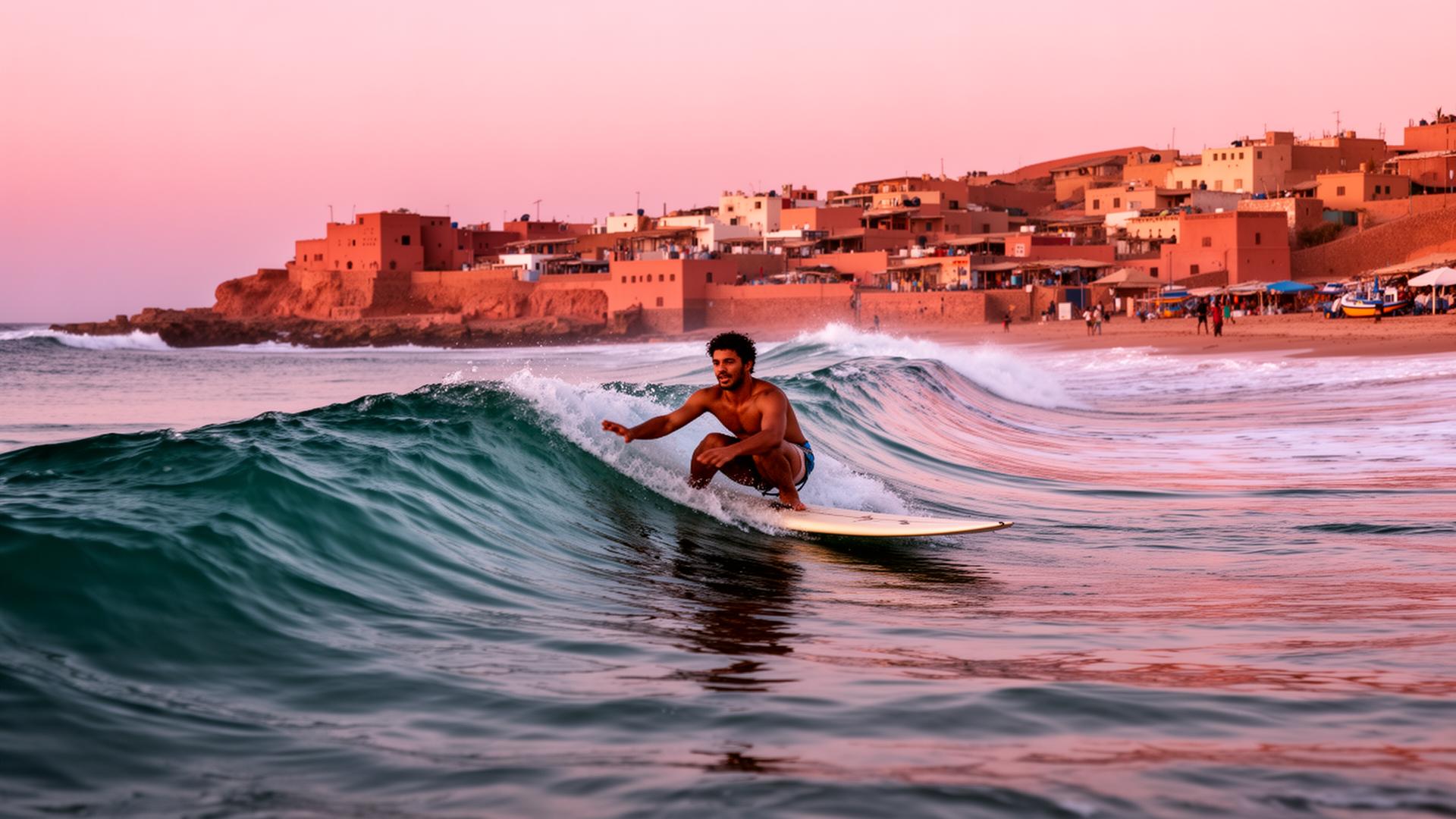
Morocco has over 3,000 km of Atlantic and Mediterranean coastline — from the windswept ramparts of Essaouira to the calm family beaches of Agadir, the surf breaks of Taghazout and the sheltered coves of the north. Here is where to go, and when.
In this guide
- 01Which are the best beaches in Morocco for different travellers?
- 02What is the sea temperature like around Morocco's coast?
- 03When is the best time to visit Morocco's beaches?
- 04Are there any hidden or less-visited beaches in Morocco?
- 05Can you combine beaches with the rest of a Morocco itinerary?
- 06Frequently asked
Which are the best beaches in Morocco for different travellers?
Morocco's beaches divide broadly along the Atlantic–Mediterranean divide and by what you want from the sea. The Atlantic coast stretches from Tangier south to Dakhla, and it is consistently windier, cooler and wilder than European beaches at the same latitude — the Canary Current keeps water temperatures between 17°C and 22°C year-round. The Mediterranean coast, running east from Tangier to the Algerian border, is calmer, warmer and less exposed to the Alizé trade wind.
The character of the beach also shifts dramatically by region. Around Agadir, wide, sheltered crescent bays are ideal for families and nervous swimmers. Around Taghazout and Imsouane, rocky point breaks create the Atlantic swell that attracts surfers from across Europe. Near Essaouira, the Alizé wind makes the beach a year-round windsurfing venue. In the north, Plage Quemado at Al Hoceïma and the beaches near Saidia offer Mediterranean calm.
- Plage d'Agadir: 10 km of sheltered bay; calm swimming; ideal for families.
- Taghazout and Anchor Point: Atlantic surf breaks; intermediate to advanced surfers.
- Imsouane: Africa's longest right-hand wave; mellow; superb for longboarders.
- Plage d'Essaouira: wild and windy; world-class windsurfing and kitesurfing.
- Sidi Kaouki: wild, near-empty beach 25 km south of Essaouira; horses and solitude.
- Plage de Saidia (east of Nador): calm Mediterranean; Morocco's largest sand beach at 14 km.
- Plage Quemado, Al Hoceïma: clear Mediterranean water; excellent for snorkelling.
What is the sea temperature like around Morocco's coast?
The Canary Current — a cold upwelling from the deep Atlantic — keeps the Atlantic coast of Morocco significantly cooler than its latitude suggests. In Agadir and Essaouira, sea temperatures range from about 17°C in February to 22°C in September; a wetsuit is comfortable for extended swimming from October to May. In summer (July–August), the water warms to 20–22°C — pleasant for a short dip but not the Mediterranean warmth many European visitors expect.
The Mediterranean coast around Al Hoceïma and Saidia runs 2–4°C warmer than the Atlantic for most of the year, reaching 25–26°C in August. If warm-water swimming is your priority, the north-east Mediterranean coast and the sheltered coves south of Tangier offer the best conditions.
When is the best time to visit Morocco's beaches?
For beach holidays, June to September is the warmest period — water temperatures peak, sunshine is reliable and the resort infrastructure around Agadir operates at full capacity. However, the Alizé wind on the Essaouira and Agadir coast blows strongest in July and August, which makes for excellent windsurfing but can make sunbathing breezy. Taghazout's surf season runs October to April, when Atlantic swells are strongest; summer is flat and the wind-blown beach is most pleasant for non-surfers.
For families combining a beach stay with inland Morocco, autumn (September–October) is the sweet spot: warm enough to swim in Agadir, comfortable for the medinas, and prime season for the desert if you add Merzouga to the route.
Can you combine beaches with the rest of a Morocco itinerary?
Essaouira sits 3 hours west of Marrakech and works well as a 2-night addition to any inland itinerary — the medina, the ramparts and the seafood are a superb decompression after the desert or the imperial cities. Agadir has its own international airport (AGA), making it viable as a standalone beach holiday or as a base for day trips to Taghazout, the argan forest and Paradise Valley. The north-east Mediterranean coast around Saidia and Al Hoceïma is easiest to combine with a Fes–Chefchaouen northern circuit rather than the southern Sahara route.
Frequently asked
What is the best beach in Morocco for families?
Plage d'Agadir — the city's 10 km crescent of sand with calm, sheltered water, lifeguards in season and resort hotel infrastructure immediately behind the beach — is the most family-friendly beach in Morocco. Agadir's beach is consistently calm enough for children to swim safely, which cannot be said for the wind-exposed Atlantic beaches further north.
Is Morocco's Atlantic water warm enough to swim in?
In summer (June–September), Atlantic water temperatures around Agadir reach 20–22°C — cool but swimmable without a wetsuit for most people. The Canary Current keeps the coast significantly cooler than equivalent Mediterranean latitudes. For warm-water swimming, the Mediterranean coast around Saidia and Al Hoceïma (25–26°C in August) or the period July–September in Agadir is your best option.
What is the best surfing beach in Morocco?
Anchor Point at Taghazout is Morocco's most famous surf break — a powerful right-hand point that can run for 300 metres at its best, suited to intermediate and advanced surfers. Imsouane, 70 km north of Taghazout, has Africa's longest right-hander and is ideal for longboarders and progression surfers. For beginners, Agadir's beach break is the safest introduction.
Are Morocco's beaches safe for swimming?
Agadir's beach is patrolled by lifeguards in season and is considered safe. On the open Atlantic coast (Essaouira, Taghazout, Sidi Kaouki) the water is powerful, with rip currents near river mouths — confidence in the water and awareness of the conditions is essential. The Mediterranean beaches in the north are calmer and generally safer for less experienced swimmers.
Is Essaouira's beach good for swimming?
The beach at Essaouira is broad and beautiful but primarily used for windsurfing, kitesurfing and walking. The Alizé wind and Atlantic power create rip currents — swimming is possible but requires confidence and respect for the conditions. The beach is not suitable for young children or weak swimmers. Agadir, 2.5 hours south, has the region's safest swimming beach.
Planning a trip?
Let a Marrakech atelier handle the details.
Tell us your dates and style and we'll send a written itinerary and a transparent quote within 24 hours.
Request an itineraryKeep reading
Planning
Surfing in Morocco: Taghazout, Agadir & Imsouane
Morocco's Atlantic coast offers consistent surf from September to April, warm winters, cheap living and a relaxed surfing culture centred on Taghazout, with long right-hand points at Imsouane and town beach options in Agadir.
Planning
Things to Do in Essaouira: The Essential Guide
Essaouira is Morocco's Atlantic counterpoint to Marrakech — a fortified white-and-blue port city with ramparts, a working fishing harbour, outstanding grilled seafood, world-class windsurfing and a medina that is genuinely liveable and calm. Three hours from Marrakech and entirely different in character.
Planning
The Best Time to Visit Morocco
Spring (March–May) and autumn (September–November) are the best all-round times to visit Morocco — warm days, cool evenings and ideal conditions for the medinas, mountains, coast and desert alike.