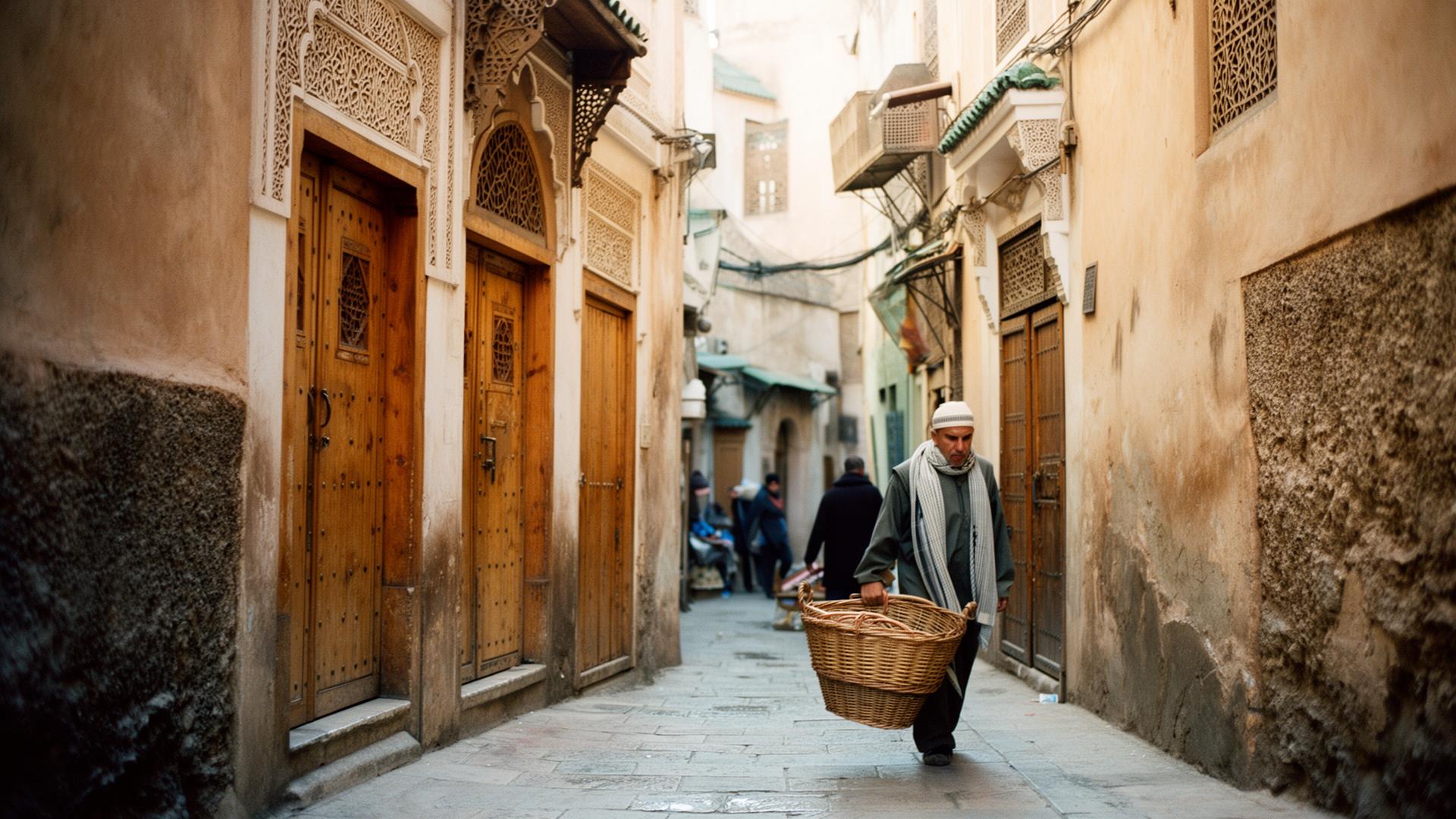
Casablanca and Rabat sit 90 km apart on Morocco's Atlantic seaboard and together form the commercial and political core of the modern kingdom. Casablanca — 'Casa' to Moroccans — is the country's economic powerhouse: a city of four million people, gleaming corporate towers, Mauresque Art Deco architecture from the French Protectorate era and, dominating everything, the Hassan II Mosque — the world's third-largest mosque, whose 210-metre minaret is visible from 50 km out to sea. It is not a traditional tourist city; it is a working metropolis with great restaurants, a buzzing nightlife and an airport that handles most of Morocco's international arrivals. Rabat, by contrast, is unhurried. As Morocco's administrative capital since 1912, it has wide tree-lined boulevards, a UNESCO-listed medina that is refreshingly free of aggressive souk touts, the Kasbah of the Udayas overlooking the estuary, and the Hassan Tower — an unfinished 12th-century minaret that would have been the tallest in the world.
Option A
Casablanca
Morocco's business capital — Art Deco grandeur, Hassan II Mosque and nightlife
Best for
Business travellers, architecture enthusiasts, those arriving via the main hub
Full guideOption B
Rabat
Morocco's royal capital — UNESCO medina, wide boulevards and a relaxed pace
Best for
History lovers, slow travellers, those wanting a less-touristed city
Full guideSide-by-side breakdown
Casablanca vs Rabat: how they compare
| Category | Casablanca | Rabat |
|---|---|---|
| Character | Cosmopolitan, fast-paced; a working city with good tourism infrastructure | Calm, political capital; tree-lined avenues; students and diplomats |
| Iconic sight | Hassan II Mosque — world's third largest; the striking Corniche; Art Deco medina | Hassan Tower; Kasbah of the Udayas; Chellah necropolis; Andalusian gardens |
| Medina character | Older medina is compact and less visited; the Habous quarter is Art Deco Moroccan | UNESCO-listed medina; less crowded than Fes or Marrakech; easier to navigate |
| Airport | Mohammed V International (CMN): Morocco's main hub — most international flights land here | Rabat–Salé Airport (RBA): limited direct international routes; most arrive via Casablanca |
| Train connections | Major railway hub; direct trains to Fes (3.5 h), Marrakech (3 h), Tangier (2.5 h) | On the main Casablanca–Tangier line; 45 min fast train (ONCF) from Casablanca |
| Nightlife & dining | Excellent — Morocco's most diverse restaurant and bar scene; clubs on the Corniche | More restrained — quality restaurants but fewer late-night options; university café culture |
| Time needed | 1–2 days; Hassan II Mosque tour is the unmissable anchor | 1–2 days; more relaxed pace; Chellah at sunset adds a third half-day |
| Cost | Mid-to-high; business-class hotels; restaurant prices competitive | Slightly lower; fewer tourist-inflated prices; excellent value riads in the medina |
Our verdict
Which should you choose?
Most visitors to Morocco pass through Casablanca's Mohammed V Airport without spending a night — a mistake, given the Hassan II Mosque alone justifies a half-day stop. Rabat is the more genuinely rewarding stay: its UNESCO medina is the most navigable of Morocco's imperial cities, the Kasbah of the Udayas is one of the country's most beautiful corners, and the absence of mass tourism makes every interaction more relaxed. The ideal approach: land in Casablanca, spend one night and see the mosque and Art Deco architecture, take the 45-minute train to Rabat for two nights, then continue south to Marrakech or north to Tangier.
Deep dives
Explore each destination in full
FAQ
Frequently asked questions
How far is Casablanca from Rabat?
Casablanca and Rabat are approximately 90 km apart — around 1.5 hours by car or as little as 45 minutes on the ONCF fast train. Trains run frequently from Casa Voyageurs station throughout the day, making a day trip between the two straightforward.
Is Casablanca worth visiting as a tourist?
Yes, but it rewards selective planning. The Hassan II Mosque — which can be visited on guided tours daily except Friday — is one of the most impressive religious buildings in the world. The Art Deco Habous quarter and the Corniche add texture. One night and one full day is usually sufficient for leisure visitors.
What is the Hassan II Mosque famous for?
The Hassan II Mosque in Casablanca is the world's third-largest mosque, completed in 1993. Its 210-metre minaret is the tallest religious structure in the world. It is built partially over the Atlantic Ocean, with a retractable glass floor above the sea. Guided tours are available for non-Muslim visitors daily except Friday.
Is Rabat safe to visit?
Rabat is one of Morocco's safest and easiest cities for tourists. As the administrative capital, it has a strong police presence and a relatively low rate of petty crime compared with Marrakech or Casablanca. The medina is notably less pressured by touts than Fes or the souks of Marrakech.
Which is better for a layover city, Casablanca or Rabat?
Casablanca is the practical choice for a layover since Mohammed V Airport is there — an overnight stay lets you visit the Hassan II Mosque without any additional transfer. If you have two or more nights before connecting, spending one in Casablanca and one in Rabat (40-minute fast train) is the most efficient circuit.
What is the Chellah in Rabat?
Chellah is a medieval necropolis and former Roman trading post on the outskirts of Rabat's medina, dating to the 3rd century BC. Inside its crenellated walls you find Merinid royal tombs, a ruined mosque and minaret, Roman column fragments, stork nests atop the ruins and a garden of fig trees and wild cats. It is one of Morocco's most atmospheric and undervisited monuments.
Ready to book?
Let a Marrakech atelier build your itinerary.
Tell us which destinations you want to combine and we'll send a written itinerary and a transparent quote within 24 hours.
Keep comparing
All destination comparisons