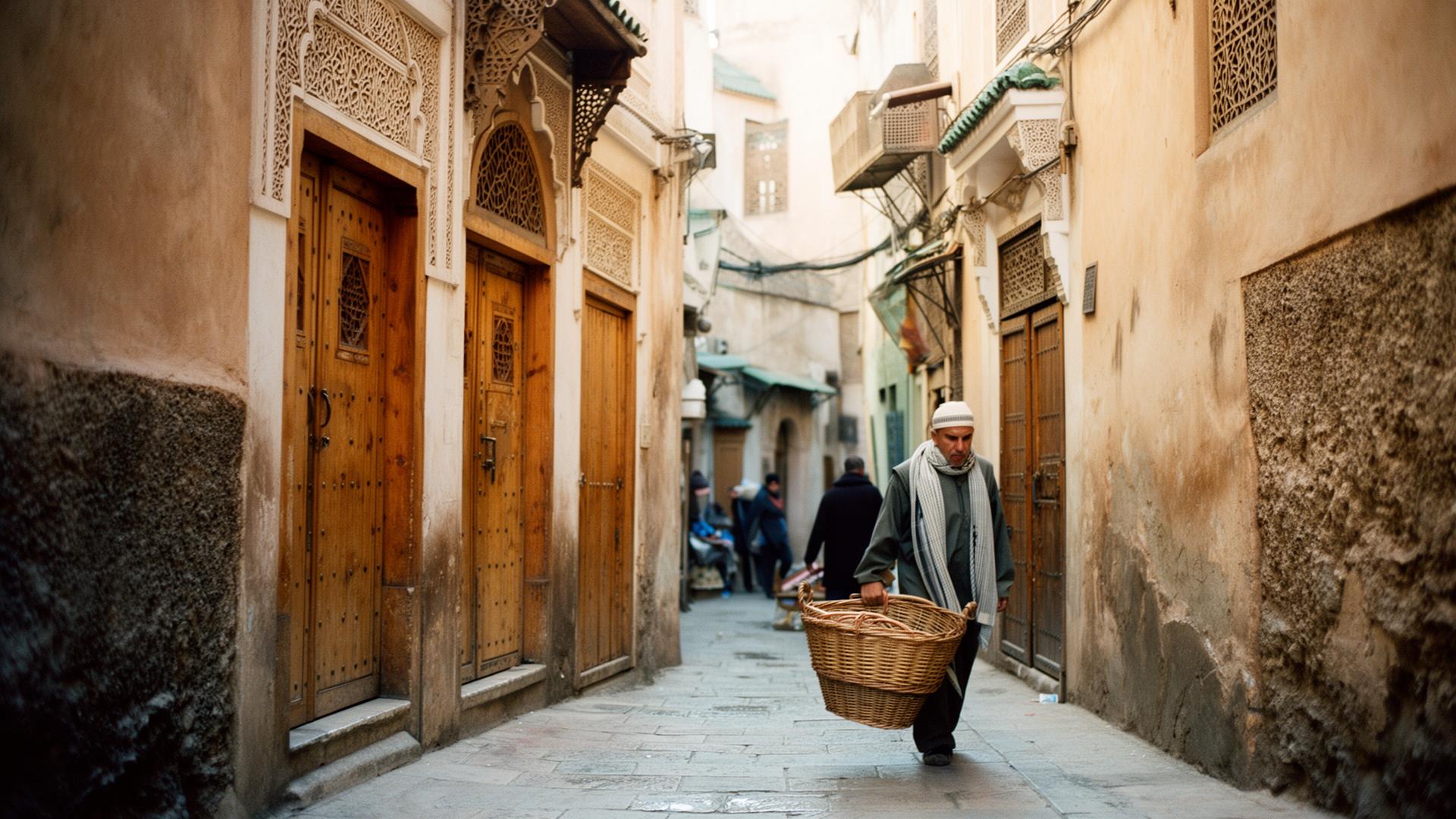
Spring (March–May) and autumn (September–November) are the best times to visit Fes — mild weather, manageable crowds and ideal conditions for walking the labyrinthine medina. This guide breaks down what every season brings to Morocco's spiritual capital.
In this guide
What is the weather like in Fes throughout the year?
Fes sits inland at around 400 m altitude, which gives it a continental climate with hotter summers and colder winters than the Atlantic coast. Average daytime highs reach 37–40°C in July and August, making extended walking in the medina genuinely uncomfortable. In January, daytime temperatures average 14–16°C — perfectly pleasant in the sun but cold after dark, with occasional overnight frosts on the outskirts.
Unlike Marrakech, Fes receives more rainfall in winter (December–February) as Atlantic weather systems push inland. Expect overcast days and light rain during this period. The medina's tiled streets and shaded souks are still navigable, but some open-air sections become damp and slippery.
When are crowds lowest in Fes?
The lowest-crowd periods are November to early December and January to February. These months are off-peak for international tourism, and you can walk the Fes el-Bali medina in relative peace — a significant difference from the October and March peak shoulder months when tour groups fill the narrow alleys around the tanneries and the Medersa Bou Inania. If your priority is the medina experience without fighting through crowds, January is exceptional: crisp, quiet and photogenic.
August is paradoxically both hot and relatively crowd-free for international tourists; domestic Moroccan tourism fills it instead. You will find riad rates lower in August, though the heat is a serious trade-off.
When is the best time for riad prices in Fes?
Peak pricing applies March to May and September to November — these shoulder seasons combine ideal weather with high demand. January and early February offer the lowest riad rates (often 30–50% below peak) with trade-offs of cooler temperatures and shorter days. August riad rates are moderate to low for international travellers but the city is busy with domestic visitors.
The Fes Festival of World Sacred Music, held in June, is one of Morocco's most prestigious cultural events, drawing international artists and visitors. Riad availability in Fes during festival week is limited; book months in advance if you want to attend. Festival dates vary slightly each year.
Month-by-month summary for Fes
January and February are cold and quiet — ideal for budget travellers and those who dislike crowds. March and April are excellent: mild temperatures (18–24°C), the medina gardens in bloom and manageable tourist numbers. May edges toward warm (25–30°C) and marks the start of the main season. June brings heat and the Sacred Music Festival. July and August are very hot and best avoided unless you have air-conditioned accommodation and plan to be indoors during midday. September and October are the second peak: warm but not oppressive, clear skies and amber light. November and December cool quickly; November is good value and December catches some Christmas-market-style festive atmosphere in the new city.
- Best overall: March–April and October.
- Best value: January–February and August.
- Best for culture: June (Sacred Music Festival).
- Avoid for heat: July and August.
- Wettest months: December–February.
What should you wear in Fes in different seasons?
Fes is a conservative city and visitors — especially women — are expected to dress modestly regardless of the season. Shoulders and knees covered is the standard expectation in the medina, at mosques and in local souks. In summer, lightweight linen layers achieve this without causing heat exhaustion; in winter, a mid-layer and a jacket are needed for evenings and early mornings.
Good walking shoes or sandals with grip are essential year-round: the medina streets are old stone, often slippery when wet. Avoid heels entirely.
Frequently asked
Is Fes hotter or cooler than Marrakech?
Fes is broadly similar in temperature to Marrakech, with perhaps marginally cooler summers due to slightly higher elevation and different geography. Both cities exceed 38°C in July and August. Fes receives more winter rainfall than Marrakech. If you are sensitive to heat, both cities are best avoided in peak summer.
Can you visit Fes in winter?
Yes — January and February are genuinely good for a medina visit. Daytime temperatures are mild (14–17°C in the sun), crowds are thin and riads are at their lowest rates. Bring warm layers for evenings and expect some overcast days and light rain. The medina itself is perfectly walkable and all the key sights are open year-round.
How many days do you need in Fes?
Two full days is the minimum to see the main highlights of Fes el-Bali — the tanneries, the mederasas, the souks and a few foundouks. Three days allows a more relaxed pace with time to get genuinely lost in the medina and visit the Bou Jeloud gardens and Fes el-Jdid. Four to five days suits travellers who want day trips to Meknes, Volubilis or the Middle Atlas.
What is the Fes Festival of World Sacred Music?
One of Morocco's premier cultural events, held annually in June in Fes. It brings together Sufi music, gospel, folk and classical traditions from across the world for a week of concerts in historic venues — including the Bab al-Makina open-air stage and Dar Batha. Tickets range from free (some outdoor stages) to USD 30–60 for premium indoor performances.
Is Fes safe to visit?
Fes is safe for tourists. The main concern is persistent guides and touts around the tannery viewpoints — a firm 'no thank you' and walking away is sufficient. Hire a licensed guide (through your riad or the official guide association) and you will not be bothered. Petty theft in very crowded areas is possible; keep your phone in a front pocket and your bag closed.
Planning a trip?
Let a Marrakech atelier handle the details.
Tell us your dates and style and we'll send a written itinerary and a transparent quote within 24 hours.
Request an itineraryKeep reading
Planning
Things to Do in Fes: The Essential Guide
Fes el-Bali is the world's largest inhabited medieval city — a UNESCO World Heritage medina of 9,400 lanes, 14th-century madrasas, the planet's oldest university and the Chouara tanneries. It demands a good guide, unhurried time and genuine curiosity.
Planning
The Best Time to Visit Morocco
Spring (March–May) and autumn (September–November) are the best all-round times to visit Morocco — warm days, cool evenings and ideal conditions for the medinas, mountains, coast and desert alike.
Itineraries
Morocco Itinerary: 10 Days
Ten days is the sweet spot for Morocco — long enough to combine Marrakech, the Sahara and the imperial north in one unhurried loop, with the coast as an optional finish.