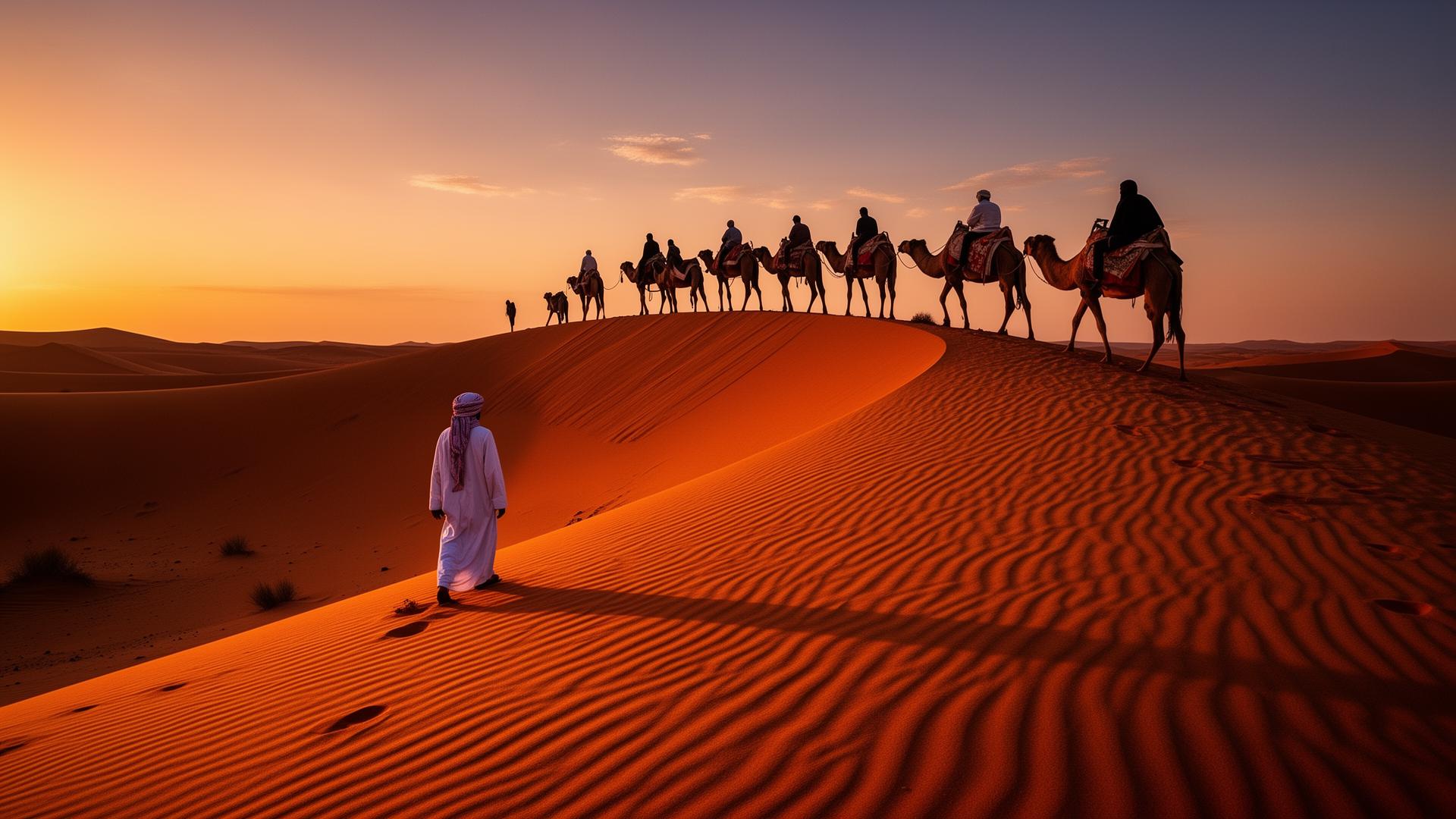
Morocco and Greece both belong to the broad Mediterranean world, but they pull in opposite directions. Morocco is a North African kingdom built for journeys: living medieval medinas in Marrakech and Fes, the orange dune seas of Erg Chebbi, the High Atlas rising past 4,000 m, blue-washed Chefchaouen and a long Atlantic coast. It is varied, immersive and works the whole year round, with strong value for money. Greece is a European Mediterranean classic and leans heavily on its islands and its antiquity: the Acropolis in Athens, the sanctuary of Delphi, the whitewashed cliffs of Santorini, the beaches and harbours of the Cyclades and the Ionian, and the easy pleasure of hopping between them by ferry. Greece is at its best in the warm months — roughly late spring through early autumn — when the seas are calm and the islands fully open; many smaller islands wind down in winter. The decision usually comes down to whether you want exotic culture and desert landscapes, or islands, beaches and ancient ruins.
Option A
Morocco
North African explorer's trip — medinas, the Sahara, the Atlas and the Atlantic coast
Best for
Culture and adventure seekers, those wanting somewhere exotic, varied and great value year-round
Full guideOption B
Greece
European Mediterranean break — islands, beaches and ancient antiquity
Best for
Island-hoppers, beach and history lovers, those wanting a relaxed summer holiday
Full guideSide-by-side breakdown
Morocco vs Greece: how they compare
| Category | Morocco | Greece |
|---|---|---|
| Where it sits | North Africa, on the Atlantic and Mediterranean; reached by direct flights from across Europe | South-eastern Europe, in the Aegean and Ionian; a short hop from most European hubs |
| Headline draws | Medinas of Marrakech & Fes, the Sahara, the High Atlas, Chefchaouen, the Atlantic coast | The Acropolis & Delphi, Santorini & Mykonos, Crete, island-hopping and Aegean beaches |
| Cultural feel | Immersive and unfamiliar — Arabic and Amazigh culture, souks, the call to prayer | European and relaxed — classical heritage, tavernas, an easy island rhythm |
| Landscape | Hugely varied — desert dunes, snow-capped mountains, gorges, palm valleys and coast | Islands and sea — beaches, caldera cliffs, olive groves and ancient ruins |
| Best time to go | Year-round; spring and autumn are ideal, the desert is best October–April | Late spring to early autumn for the islands; many wind down in winter |
| Trip style | An explorer's journey — moving between cities, mountains and desert by road | A Mediterranean break — beach days, ferries and a slower island pace |
| Cost & value | Strong value — accommodation, food and guides cost noticeably less | Moderate — good value off-season, but popular islands get pricey in peak summer |
| Best for | Adventure, culture and landscape variety; somewhere that feels far from home | Sun, sea, ancient history and the simple pleasure of island-hopping |
Our verdict
Which should you choose?
Choose Greece if you want a relaxed European Mediterranean holiday built around islands, beaches and ancient ruins — it is hard to beat for summer sun, easy ferries and laid-back tavernas, and it suits travellers who want familiarity and downtime. Choose Morocco if you want a more exotic, adventurous journey: living medinas, the Sahara, the Atlas Mountains and a culture that feels genuinely different from home, all at strong value and across a wider range of seasons. They are different enough that the honest answer is rarely a tie — pick Greece for islands-beaches-and-antiquity, and Morocco for exotic-culture-and-desert. If your dream trip is camel trekking into Erg Chebbi and getting lost in the Fes medina, Morocco is the one.
Deep dives
Explore each destination in full
FAQ
Frequently asked questions
Is Morocco or Greece better to visit?
Neither is objectively better — they suit different moods. Greece is ideal for a relaxed Mediterranean break: islands, beaches, ancient ruins like the Acropolis, and easy ferry hopping, best enjoyed from late spring to early autumn. Morocco is better for an immersive, adventurous trip — medinas, the Sahara and the Atlas Mountains — at strong value and across more of the year. Choose by whether you want islands and antiquity, or exotic culture and desert.
When is the best time to visit Morocco versus Greece?
Morocco works year-round: spring (March–May) and autumn (September–November) are ideal, the Sahara is most comfortable October–April, and the coast and mountains offer summer alternatives to the inland heat. Greece is strongly seasonal — the islands are at their best from roughly May to early October, while many smaller islands and seasonal services wind down in winter. If you want summer sun and island-hopping, Greece; if you want flexibility across the calendar, Morocco.
Is Morocco cheaper than Greece?
Generally yes. Accommodation, meals, local transport and guides typically cost less in Morocco. Greece can be good value out of season, but popular islands such as Santorini and Mykonos become expensive in peak summer. Both can be done on a range of budgets, but Morocco usually offers stronger value overall.
Is Morocco or Greece better for beaches?
Greece is the stronger beach destination, with thousands of islands, clear Aegean and Ionian waters and a deep beach culture. Morocco has a long Atlantic coast — Essaouira, Agadir and Taghazout — that is excellent for surfing, kitesurfing and breezy coastal towns, but the Atlantic is cooler and windier than the Greek seas. For classic swim-and-sunbathe beach holidays, Greece edges it; for surf and dramatic coast alongside desert and mountains, Morocco.
Can you combine Morocco and Greece in one trip?
It is possible but less natural than some pairings, as the two are at opposite ends of the Mediterranean rather than next door, so you would fly between them rather than cross by ferry. Most travellers treat them as separate trips. If you do want both, allow enough time for each — a week or more in Greece's islands and at least a week in Morocco — and connect via a European hub.
Ready to book?
Let a Marrakech atelier build your itinerary.
Tell us which destinations you want to combine and we'll send a written itinerary and a transparent quote within 24 hours.
Keep comparing
All destination comparisons